
Watch Complications Explained: What Each One Does and Which Are Worth It
Watch complications are functions beyond telling the hours, minutes, and seconds, ranging from a simple date display to intricate mechanisms that track multiple time zones or astronomical cycles.
Some complications make everyday life easier. A date window helps you follow your schedule, a chronograph measures elapsed time, and a GMT hand tracks another time zone. Others, including moonphase displays and tourbillons, appeal primarily to people who appreciate watchmaking craftsmanship.
The good news? You don't need an expensive mechanical watch to enjoy useful complications. Quartz and solar-powered models from brands such as Citizen, Bulova, Tissot, and Pulsar offer several practical features at accessible price levels.
This guide explains the major types of watch complications, how they work, their everyday usefulness, and which ones deserve a place on your wrist.
Quick answer: For most buyers, date, day-date, chronograph, and GMT functions offer the greatest everyday value. Moonphase displays emphasize appearance, while tourbillons and grand complications primarily appeal to collectors.
Watch Complications at a Glance
Not every complication serves the same purpose. Some provide information you might check several times daily, while others demonstrate the skill involved in mechanical watchmaking.
The comparison below helps you know the function, usefulness, and general price positioning of common watch complications.
|
Complication |
What It Does |
Daily Usefulness |
Typical Price Tier |
|
Date |
Displays the calendar date |
High |
Entry |
|
Day-date |
Shows the weekday and date |
High |
Entry |
|
Annual calendar |
Adjusts for 30- and 31-day months |
Medium |
Mid–High |
|
Perpetual calendar |
Accounts for month lengths and leap years |
Medium |
Mid–High |
|
Chronograph |
Measures elapsed time |
High |
Entry–High |
|
GMT / dual time |
Tracks another time zone |
High for travelers |
Entry–Mid |
|
World time |
Displays multiple global time zones |
Medium |
Mid–High |
|
Moonphase |
Displays the lunar cycle |
Low |
Mid–High |
|
Power reserve |
Shows remaining mechanical running time |
Medium |
Mid |
|
Alarm |
Provides a timed reminder |
Medium |
Entry–High |
|
Tourbillon |
Rotates the regulating mechanism |
Low |
High |
These tiers are general comparisons, not fixed pricing rules. Quartz watches often bring functions into lower price categories, while mechanically complicated watches can cost considerably more.
Before buying, consider which information you will actually use rather than choosing a watch based solely on its number of features.
Date and Calendar Complications
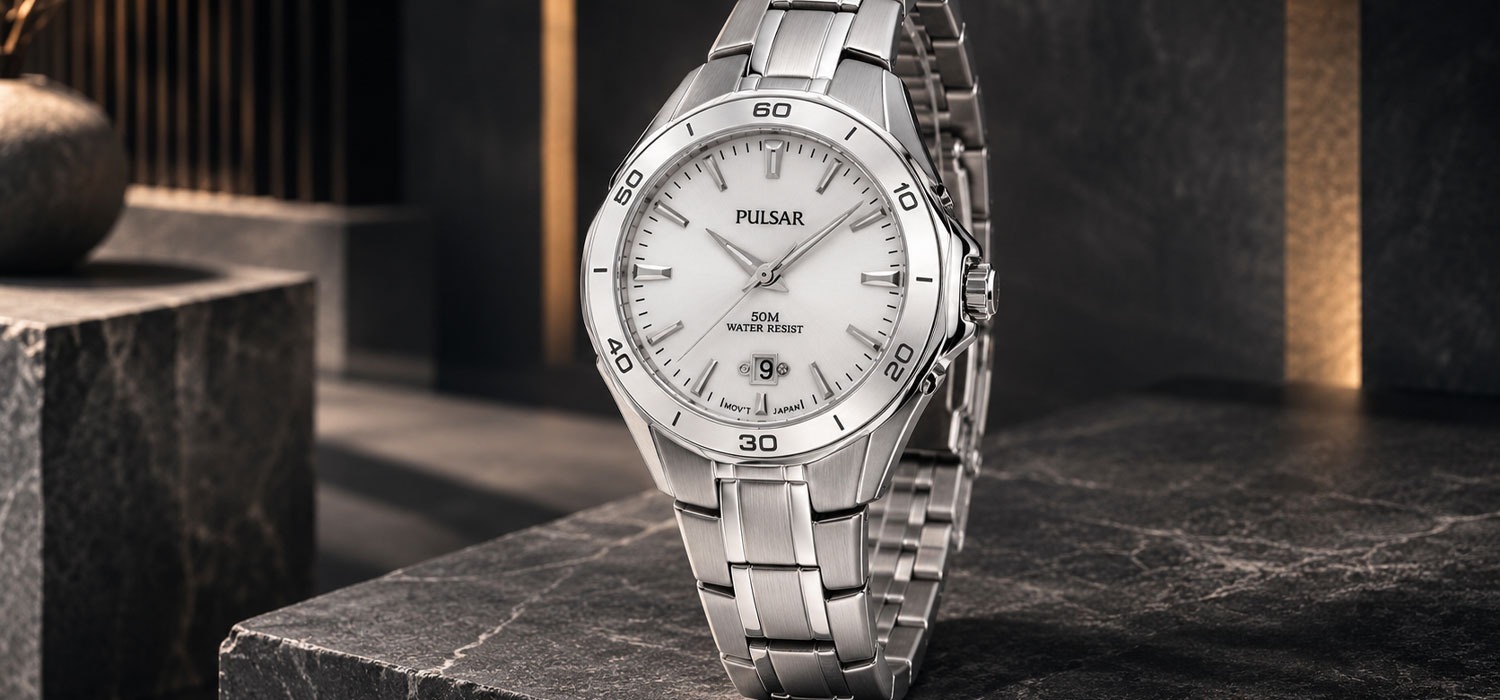
Calendar complications range from simple date windows to sophisticated mechanisms that account for different month lengths and leap years.
Date and Day-Date Watches
A date complication displays the current day of the month, usually through a small window on the dial. It's one of the most common and useful watch features.
Most basic date mechanisms advance through a 31-day cycle. During shorter months, the wearer must manually correct the date.
A day-date watch displays the weekday, often alongside the numerical date or via a separate dial opening.
For everyday wear, a day-date display can be particularly useful when checking appointments, organizing schedules, or working without constantly reaching for a phone.
The Tissot PRS516 Day-Date Swiss Automatic Watch T100.430.17.011.00 is an example of a model that combines traditional mechanical timekeeping with calendar functionality.
When comparing day-date watches, prioritize dial readability and convenient calendar adjustment. A clearly visible display can be more useful than an elaborate calendar that's difficult to read.
Annual Calendar Watches
An annual calendar watch automatically distinguishes between months containing 30 and 31 days.
Unlike a standard date watch, it doesn't require manual correction after every shorter month. Instead, the wearer generally needs to adjust the calendar just once annually, at the end of February.
This makes annual calendars appealing to people who prefer mechanical watches but don't want to correct the date frequently.
Annual calendar displays commonly include the day, date, and month, although individual watch designs vary.
The added mechanism makes these watches more complicated than basic day-date models. Mechanical annual calendars typically fall into higher price categories because their movements must account for varying month lengths.
For everyday buyers, an annual calendar provides convenience, but the benefit depends on how much they value reduced manual adjustment.
Perpetual Calendar Watches
A perpetual calendar takes calendar functionality further by automatically accounting for different month lengths, February, and leap years.
A traditional mechanical perpetual calendar can maintain the correct calendar sequence for decades when kept running, although many conventional designs require correction in 2100 because that year isn't a leap year.
Mechanical perpetual calendars demonstrate considerable watchmaking skill and generally occupy the higher end of the market.
However, electronic watch technology offers similar convenience at more affordable prices.
A Citizen Eco-Drive perpetual calendar uses an electronically controlled quartz movement to manage calendar information, while Eco-Drive technology converts light into stored electrical energy.
That combination reduces routine calendar adjustments and avoids the conventional disposable-battery replacement cycle.
For buyers who prioritize convenience, Citizen Eco-Drive perpetual calendars can be a practical alternative to expensive mechanical models.
Browse Citizen watches or read how Eco-Drive works to know light-powered watch technology.
Chronograph: A Stopwatch Built Into Your Watch
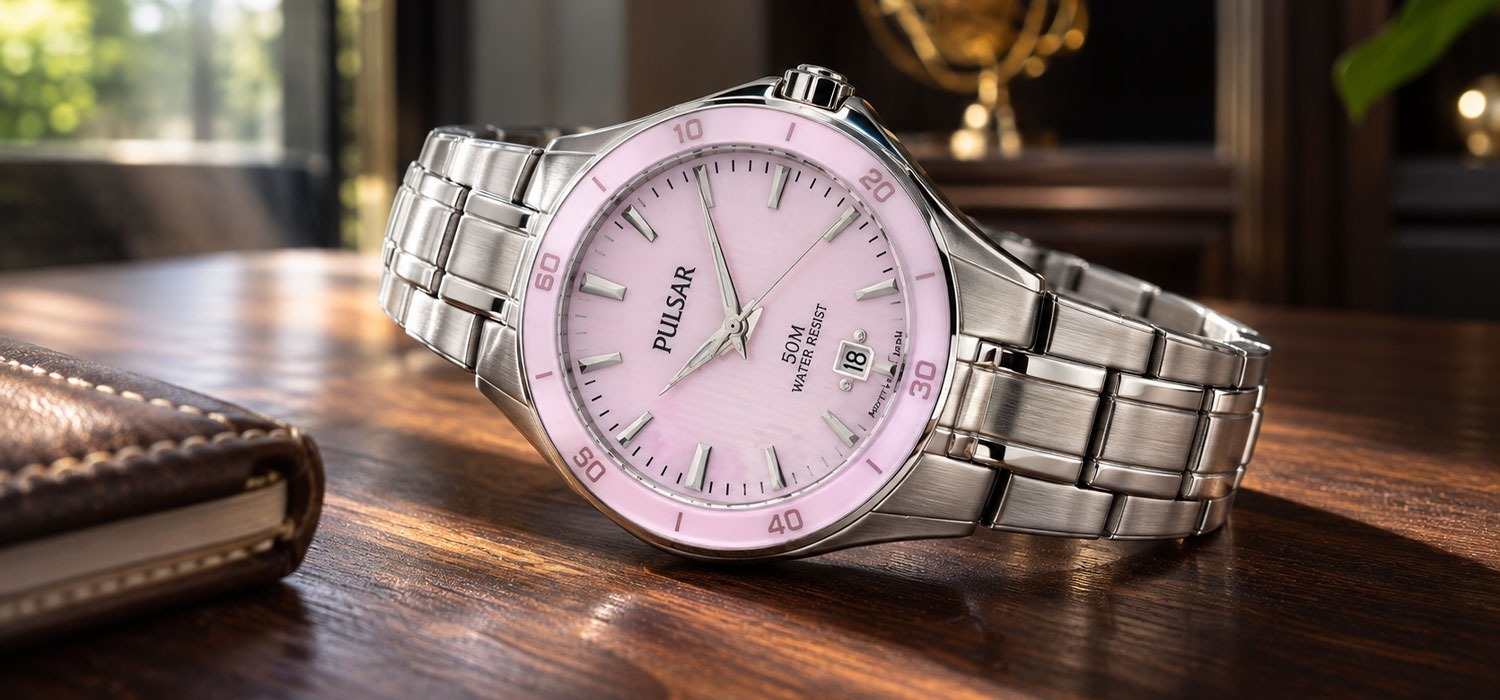
A chronograph is a watch complication that measures elapsed time without interrupting normal timekeeping.
Most analog chronographs feature pushers beside the crown, allowing the wearer to start, stop, and reset a stopwatch function.
Subdials may display elapsed minutes, hours, or fractions of a second, depending on the movement.
A chronograph is useful for timing workouts, cooking, travel intervals, or other everyday activities.
Some chronographs also include a tachymeter scale, which can be used with the stopwatch to calculate average speed over a known distance.
Quartz chronographs provide convenient timing functions at accessible price levels, while mechanical chronographs appeal to buyers interested in the movement's construction.
The Pulsar PF3547 alarm chronograph demonstrates how multiple useful functions can be packed into a single quartz watch.
Do you actually need a chronograph? If you regularly measure short intervals, it can be worthwhile. Otherwise, a simpler watch may suit you better.
Read our guide explaining what a chronograph does for more details.
GMT, Dual Time, and World Time Watches
A GMT watch displays a second time zone using an additional hand that typically completes one rotation every 24 hours.
This allows travelers and people working internationally to monitor their home time while checking the local time.
A dual time watch serves a similar purpose but may use a separate subdial or digital display rather than a dedicated GMT hand.
For example, the Tissot PR 100 Dual Time T-Classic demonstrates how a second time display can be incorporated into a conventional-looking watch.
The practical difference between GMT and dual-time watches usually lies in how the additional time zone is displayed and adjusted.
GMT designs are especially popular among frequent travelers. Dual-time displays also work well for people coordinating meetings with colleagues, family members, or business partners overseas.
A world time watch goes further by displaying the time across multiple global time zones, often using a rotating city ring or dedicated dial markings.
For most buyers, tracking one additional time zone is enough.
When choosing among these complications, consider readability, ease of adjustment, and whether you regularly need a second time zone.
Moonphase Watches: The Lunar Cycle on Your Wrist
What is a moonphase watch? It's a watch featuring a display that shows the moon's phases throughout its approximately 29.5-day cycle.
Most traditional moonphase watches use a rotating disc visible through an opening on the dial.
As the disc moves, it indicates phases such as the new moon, first quarter, full moon, and last quarter.
Unlike a date or chronograph, a moonphase complication rarely provides essential everyday information.
Its primary appeal comes from its visual character and its connection to traditional astronomical watchmaking.
Moonphase watches often complement dress watch designs because the display adds detail without requiring multiple prominent controls.
The Bulova Rubaiyat collection includes a moonphase model featuring a mother-of-pearl dial, demonstrating how the complication can become a central design element.
Browse through Bulova watches for available styles.
Is a moonphase watch worth buying? It can be, particularly if you appreciate its appearance and traditional craftsmanship. However, buyers seeking purely practical functionality may receive greater value from a calendar or GMT watch.
Power Reserve Indicator: Know When Your Watch Needs Winding
A power reserve indicator shows how much stored energy remains in a mechanical watch before it stops running.
Mechanical watches store energy in a mainspring, which gradually releases that energy to power the movement.
A power reserve display typically uses a small hand, gauge, or numerical indication to show the remaining running time.
This feature is particularly useful for manually wound watches, as it helps owners determine when additional winding is needed.
Automatic watches can also include power reserve indicators, allowing wearers to check whether the movement has sufficient stored energy.
For someone who rotates between multiple watches, the display provides a convenient way to monitor running time.
Although not essential for every buyer, a power reserve indicator combines practical information with an interesting view of mechanical timekeeping.
Alarm Watches: Timed Reminders Without Your Phone
An alarm complication allows a watch to signal a predetermined time using sound or vibration, depending on its design.
Quartz alarm watches generally use electronic circuitry to control the reminder, making them relatively accessible.
Some models combine alarms with chronographs, providing both timed reminders and stopwatch functionality.
The Pulsar PF3547 Alarm Chronograph illustrates how these two features can appear together.
A mechanical alarm watch uses a dedicated mechanical mechanism to produce an audible signal.
These watches are much less common and often appeal to collectors for their intricate construction and traditional engineering.
For everyday buyers, an alarm can be useful for meetings, appointments, travel reminders, or scheduled activities.
However, most people already receive notifications through smartphones and other devices.
An alarm complication is worth considering if you prefer a wristwatch-based reminder or appreciate the way the function works.
Tourbillon and Grand Complications
Some watch complications are valued less for daily convenience and more for the technical skill involved in creating their movements.
Tourbillon Watch: What Makes It Special?
A tourbillon watch contains a rotating cage that houses important regulating components, including the balance wheel and escapement.
The mechanism was developed to reduce the positional effects of gravity on mechanical timekeeping, particularly in watches frequently held in fixed positions.
A tourbillon is often visible through an opening in the dial, allowing owners to observe the rotating mechanism.
However, watch experts debate whether a tourbillon technically qualifies as a complication.
Unlike a chronograph or calendar, it doesn't provide an additional display or independent function. Instead, it modifies the watch's regulating system.
Tourbillons are primarily associated with high-end mechanical watchmaking rather than essential daily functionality.
For buyers interested in movement construction, our guide to mechanical movements provides additional background.
Grand Complications
A grand complication combines several demanding mechanical functions within a single movement.
These may include a perpetual calendar, minute repeater, and split-seconds chronograph.
A minute repeater sounds the time through a sequence of chimes, while a split-seconds chronograph measures overlapping timed events.
Combining these mechanisms requires careful coordination between numerous moving components.
Grand complications generally occupy the highest levels of traditional watchmaking.
For most buyers, their appeal lies in craftsmanship, mechanical complexity, and collectibility rather than everyday convenience.
They demonstrate what watchmakers can achieve when technical construction becomes as important as the basic purpose of telling time.
Which Watch Complications Are Worth Paying For?
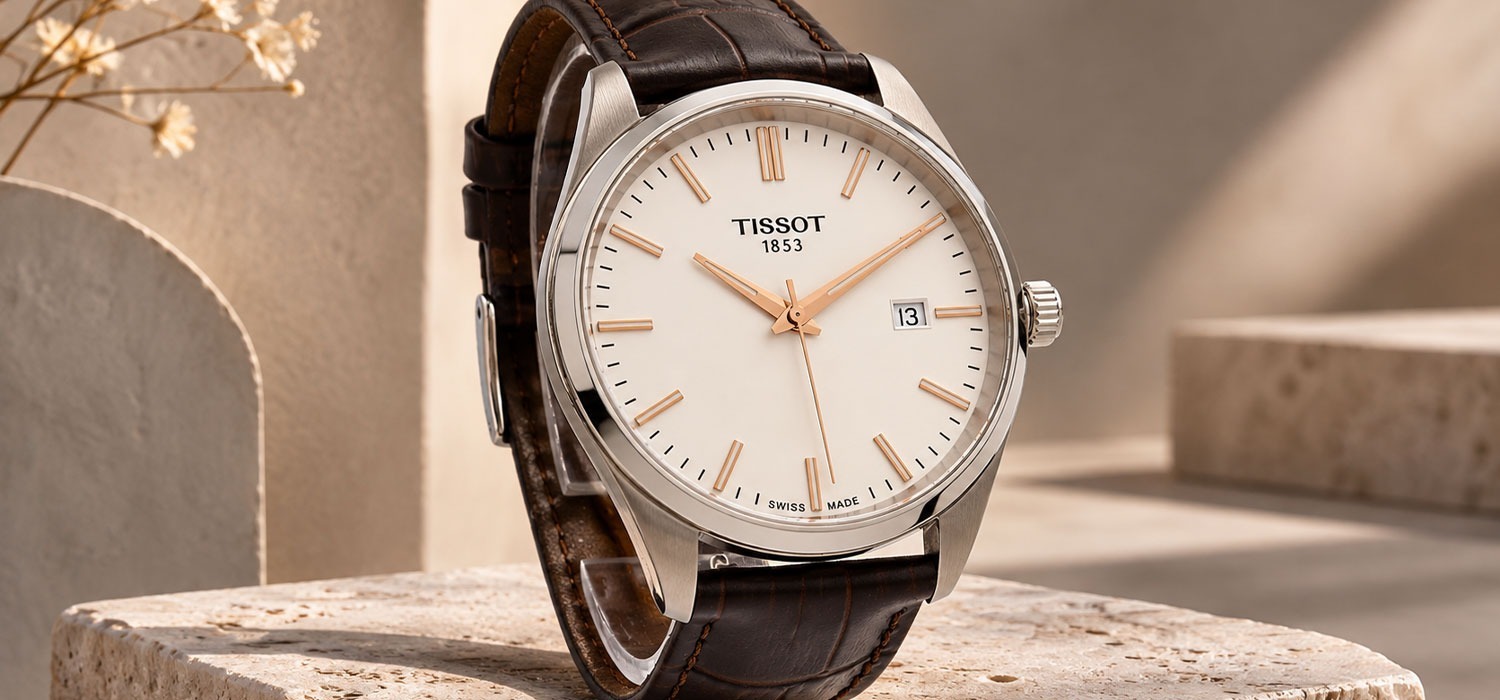
The best watch complication depends on how frequently you'll use it.
For everyday convenience: Date and day-date displays are practical choices. They provide immediately useful information without complicated controls or significant maintenance demands.
For travel and international work: GMT and dual-time functions are worthwhile when you regularly communicate across time zones or travel between locations.
For activities and timing: A chronograph offers practical value if you regularly time workouts, cooking, or other events.
For mechanical watch enthusiasts: Power reserve indicators and annual calendars provide useful information while showcasing movement design.
For appearance: Moonphase displays are appealing when you appreciate their dial design, even if you rarely need lunar information.
For collectors: Tourbillons and grand complications demonstrate mechanical craftsmanship but aren't necessary for ordinary timekeeping.
Quartz and solar-powered watches deserve consideration because they can provide several useful functions without the cost or maintenance requirements of elaborate mechanical movements.
Before spending more, ask yourself whether you'll regularly use the complication and whether it improves your experience.
For additional buying guidance, read about features worth paying for.
Do Watch Complications Cost More to Service?
Watches with additional mechanical complications often require more involved servicing than simpler models.
A mechanical chronograph, annual calendar, or perpetual calendar contains additional components that a watchmaker may need to inspect, clean, lubricate, and adjust.
Servicing complexity depends on the movement's construction, condition, parts availability, and manufacturer requirements.
Quartz watches with electronic complications generally require less mechanical servicing because their functions depend primarily on electronic components.
However, batteries, seals, electronic modules, and other parts may still require attention over time.
Solar-powered watches also require proper care, including maintaining adequate light exposure and following the manufacturer's guidance.
More complications don't automatically mean a watch will become unreliable. Movement quality, correct operation, maintenance, and environmental conditions also matter.
Before buying a complicated mechanical watch, consider its long-term ownership requirements.
Read our guide to servicing a complicated watch for more information about maintenance and longevity.
Watch Complications FAQs
What counts as a watch complication?
Any function beyond displaying hours, minutes, and seconds generally counts as a complication. Common examples include date displays, chronographs, GMT hands, moonphase indicators, alarms, and calendar mechanisms.
Is a tourbillon a complication?
Its classification is debated. Some watchmakers categorize it as a complication because of its mechanical complexity. Others consider it a regulating mechanism because it doesn't provide an additional timekeeping function or display.
What is a grand complication?
A grand complication is a mechanical watch that combines multiple highly complex functions. Examples include perpetual calendars, minute repeaters, and split-seconds chronographs. These watches typically represent exceptional technical craftsmanship.
What's the most useful watch complication?
For most people, the date or day-date display is the most useful. Travelers may prefer GMT functionality, while people who regularly measure elapsed time can benefit from a chronograph.
Do quartz watches have complications?
Yes. Quartz watches can include chronographs, alarms, dual-time displays, perpetual calendars, and other functions. Electronic movements make many of these features available without complicated mechanical assemblies.
Do complications make a watch less reliable?
Not necessarily. Additional mechanical components can increase servicing complexity, but reliability depends on movement quality, maintenance, and proper use. Well-made complicated watches can perform reliably when cared for correctly.
Find Watches With the Features That Matter
Choose a watch based on the functions you'll actually use. Browse men's sport watches and men's dress watches at Inventory Adjusters to find authentic timepieces available below MSRP.
Newest Guide & Blog Updates

Watch Complications Explained: What Each One Does and Which Are Worth It
Watch complications are functions beyond telling the hours, minutes, and seconds, ranging from a si...

Are Breitling Watches Good? Do They Hold Their Value?
Are Breitling watches good? Yes. Breitling is a respected Swiss luxury watchmaker known for precisi...

Is Longines a Luxury Brand?
Is Longines a luxury brand? Yes. Longines is a Swiss luxury watchmaker with nearly 200 years of his...

Is Tissot a Luxury Brand? Where Tissot Sits in the Swiss Lineup
Is Tissot a luxury brand? Yes, but it belongs in the accessible Swiss luxury category rather than t...

Is Seiko a Good Watch Brand?
Is Seiko a good watch brand? Yes, and it has been proving it since 1881. Quality depends on the lin...

How to Avoid Counterfeit Stock When Buying Wholesale Watches
How to avoid counterfeit wholesale watches starts with verifying the supplier, reviewing documentat...