
Mechanical Watches: Traditional craftsmanship
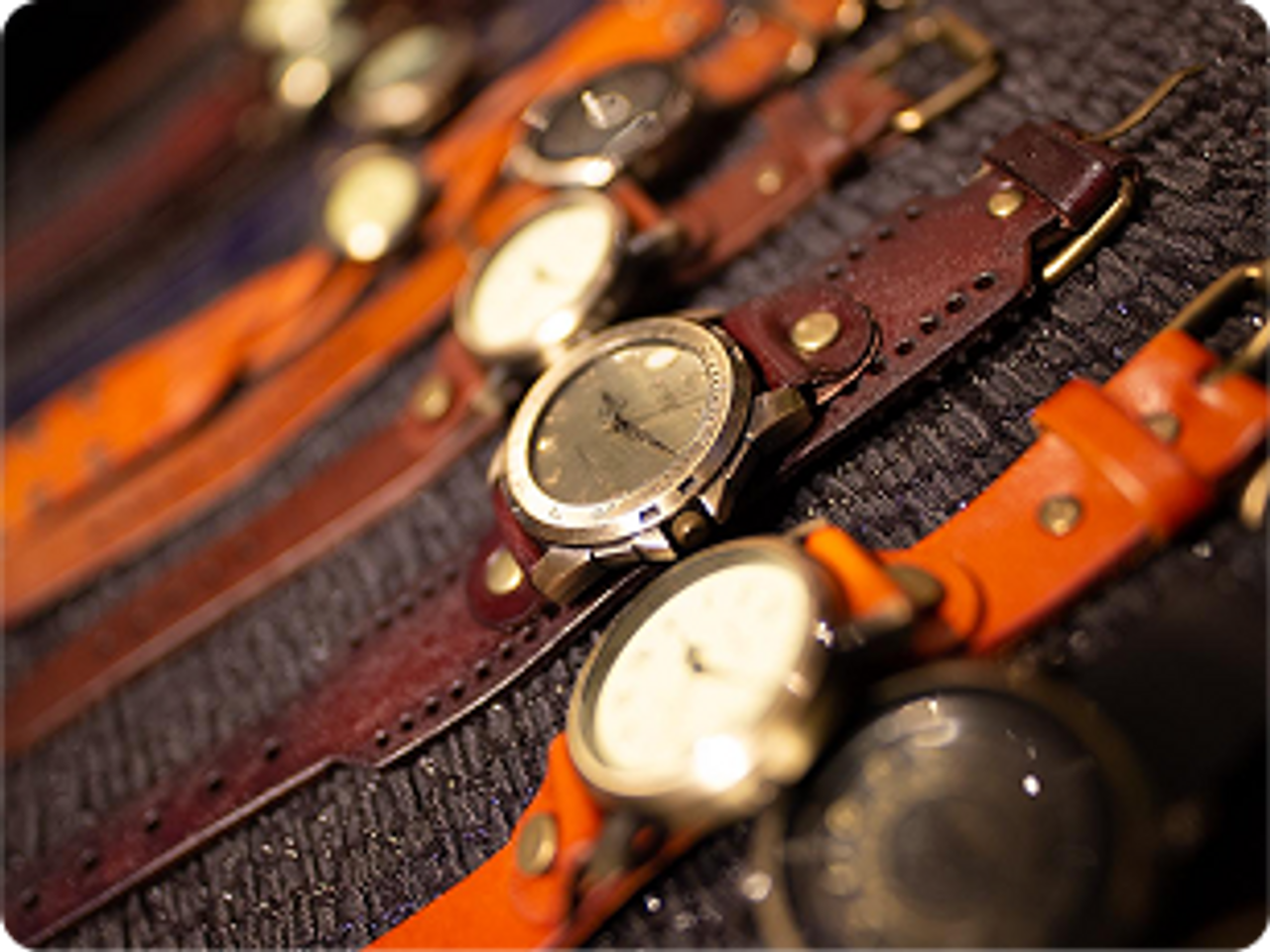
What Is a Mechanical Watch?
A mechanical watch is a timepiece powered entirely by a wound mainspring rather than a battery. That spring slowly releases stored energy through a series of gears, called the gear train, which drives the hands around the dial. A component called the escapement releases this energy in tiny, controlled bursts, while the balance wheel oscillates back and forth to regulate the pace, typically three to four times every second.
You will not find a circuit board or a crystal oscillator anywhere inside. Every second on a mechanical watch is the product of physical parts moving against each other, which is why watchmakers and collectors treat these movements as small feats of engineering rather than just clocks you wear.
How Does a Mechanical Watch Work
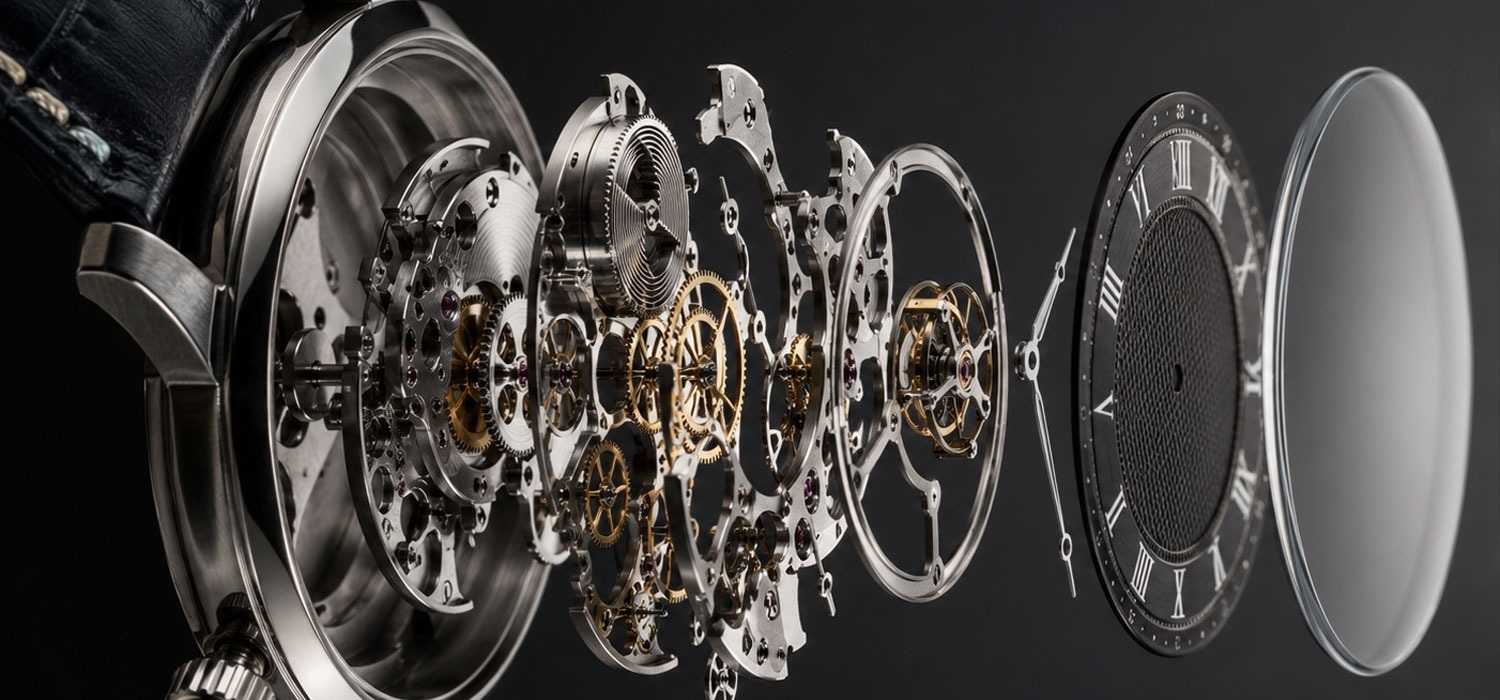
Winding the crown tightens the mainspring, and that tension is the watch's entire fuel supply. From there, the process breaks down into three stages.
Power source. The mainspring stores energy the same way a wound-up toy car does, through tension in coiled metal.
Energy transfer. As the spring unwinds, it turns a barrel connected to the gear train. Each gear steps the energy down and passes it along, eventually turning the hour, minute, and second hands.
Regulation. Without a way to slow that release, the spring would unwind in seconds. The escapement locks and releases the gear train in rapid, even intervals, while the balance wheel swings back and forth to keep every interval the same length. This is what produces the smooth, sweeping second hand on a mechanical watch instead of the single tick-per-second motion on a quartz piece.
Think of it as controlled release rather than instant release, closer to a water wheel metering out a steady flow.
Watch Mechanism Explained
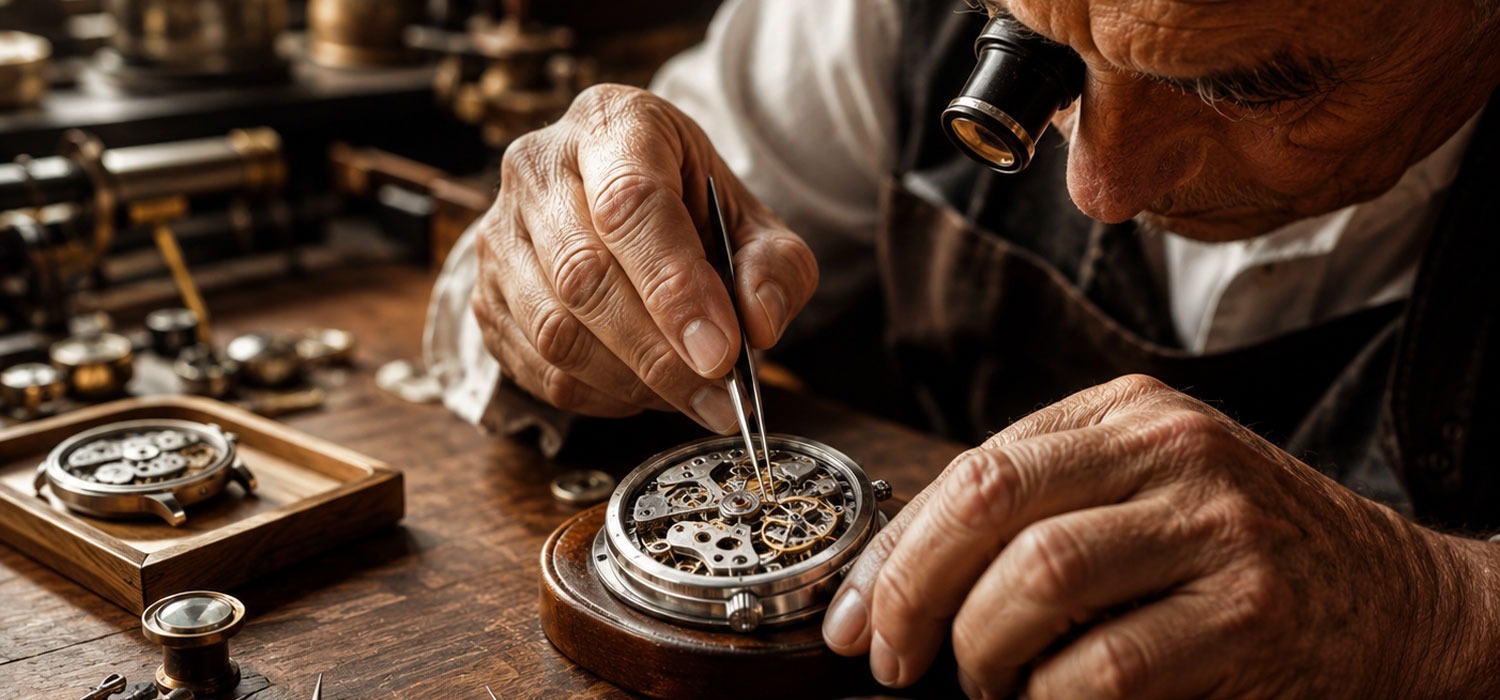
Open the case back on a mechanical watch, and you will find a compact system built from a handful of core parts working in sequence.
- The mainspring stores the energy that powers the movement.
- The barrel houses the mainspring and begins the energy transfer.
- Gear train carries energy from the barrel to the escapement, stepping down speed along the way.
- Escapement meters out energy in small, precise increments.
- Balance wheel and hairspring oscillate at a fixed rate, typically 21,600 to 28,800 vibrations per hour, to keep time accurate.
- Jewels are synthetic rubies set at friction points to reduce wear, which is why watches are often marketed by jewel count.
Higher-end movements finish and adjust each of these parts by hand, a major reason mechanical movements cost more to produce than quartz ones.
Types of Watches and How They Differ
Most watches on the market fall into three categories, and understanding the differences makes shopping a lot easier.
Mechanical watches run entirely on a wound mainspring and require manual winding, usually every one to two days.
Automatic watches are mechanical watches with an added rotor, a semicircular weight that spins with wrist motion and winds the mainspring for you, so regular wear means no manual winding.
Quartz watches run on a battery that sends a current through a quartz crystal, causing it to vibrate at a fixed rate. A circuit converts that vibration into the ticking motion on the dial. Quartz movements are generally far more accurate day to day, often within about 15 seconds a month, while a well-regulated mechanical or automatic movement typically runs somewhere between -20 and +40 seconds a day. Quartz wins on accuracy, low maintenance, and price, while mechanical wins on craftsmanship and long-term collectible value.
Automatic vs Mechanical Watch
Every automatic watch is a mechanical watch, but not every mechanical watch is automatic. The distinction comes down to how the mainspring gets wound.
A manual mechanical watch needs you to turn the crown regularly, typically once a day, to keep the mainspring tensioned. Skip too many days, and it simply stops; then you will need to reset the time.
An automatic watch solves that with a rotor that swings freely inside the case. Normal wrist movement keeps that rotor spinning, which winds the mainspring without any effort on your part. Most automatic watches hold a power reserve of roughly 38 to 48 hours once fully wound, so you can set one down for a night or two and it will still be running when you pick it back up. Our earlier breakdown of how a rotor swings in response to motion covers this mechanism in more detail.
Mechanical Watches for Men and Women
Mechanical movements are available across nearly every watch style and case size, so the choice usually comes down to design rather than the movement itself.
Men's mechanical and automatic watches typically feature larger case sizes, ranging from 40 mm to 46 mm, with sportier dials, chronograph subdials, or exhibition case backs that showcase the movement. Explore our men's watches collection to find styles that fit this look.
Women's mechanical watches generally feature smaller cases, ranging from 26 mm to 36 mm, with cleaner dials and refined finishes. However, larger automatic watches have become increasingly popular among women who prefer a bolder everyday style. Browse our women's watches collection to explore the latest options.
A well-built mechanical movement performs the same regardless of case size, so your decision should be based on fit and personal style rather than the label on the box.
Luxury Mechanical Watches and Watch Brands
Heritage matters more in mechanical watches than almost anywhere else in fashion, because the movement inside represents decades or even centuries of refinement passed down through a brand's watchmakers.
We carry mechanical and automatic pieces from names built on exactly that kind of history. Bulova has produced American-made movements since 1875 and still runs a dedicated Automatic collection. Seiko's automatic lines remain some of the most respected in the industry at every price point, while Movado and Tissot bring Swiss watchmaking tradition into more accessible price ranges. Tag Heuer applies that same heritage to chronograph-driven sport watches, and Invicta has built a following with automatic dive and pilot watches that borrow design language from far more expensive Swiss pieces.
Browse our full lineup by heritage and price point on our brands page to compare movement types across manufacturers before you commit to one.
Finding the Best Mechanical Watch for You
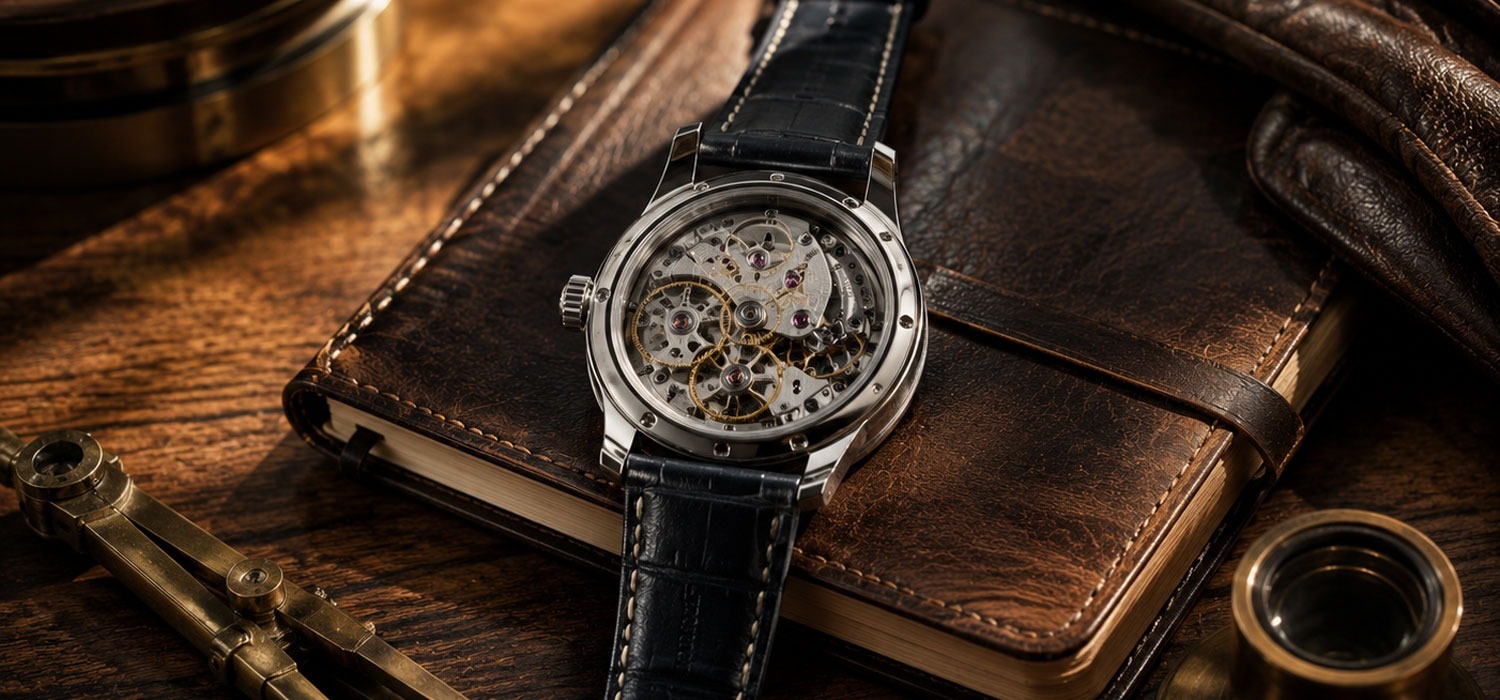
“Best” depends entirely on what you are shopping for. An entry-level automatic from Seiko or Invicta gets you genuine mechanical engineering and a collector-friendly rotor system for a fraction of what a Swiss heritage piece costs. A collector-grade mechanical watch from a brand like Tag Heuer or Movado adds finer finishing, tighter accuracy tolerances, and stronger resale value over time.
Weigh these factors against each other before buying.
- Movement quality. Higher jewel counts and finer finishing usually signal a more refined movement.
- Power reserve. Longer reserves mean fewer resets if you rotate between multiple watches.
- Durability. Look for shock protection systems, which most modern mechanical movements include as standard.
- Brand heritage. Established watchmakers tend to hold resale value better than newer names.
Our watch buying guide walks through these same factors in more depth, and our breakdown of key watch features that actually matter is worth a look before you decide what to prioritize.
Caring for a Mechanical Watch
A mechanical watch rewards a bit of routine maintenance with decades of accurate service, often outliving the person who bought it.
Wind manual watches at roughly the same time each day rather than letting the power reserve run all the way down repeatedly. Wear automatic watches regularly, or keep one on a watch winder, so the rotor stays active and the mainspring stays wound. Store watches you are not wearing in a cool, dry spot away from direct sunlight and magnets, since strong magnetic fields can throw off the balance wheel's timing.
Plan on a full service every three to five years. A watchmaker will clean, oil, and re-regulate the movement, which is routine maintenance rather than a sign that anything is wrong. Our guide on the hidden costs of owning a watch covers what that servicing typically involves, and our tips on storing watches properly go deeper into protecting your collection between wears.
FAQs
1.What is a mechanical watch?
A timepiece powered by a wound mainspring that releases energy through a gear train to move the hands, without using a battery.
2. How does a mechanical watch work?
It stores energy in a wound mainspring, releases that energy gradually through a gear train, and regulates the pace with an escapement and balance wheel.
3. What is the difference between quartz and mechanical watches?
Quartz watches use a battery and a vibrating crystal for accuracy, while mechanical watches rely on a spring-driven movement with gears and mechanical regulation.
4. What is a watch mechanism?
The internal system of gears, springs, and regulating parts that work together to measure and display time is also called the movement.
5. What are the main types of watches?
Mechanical, automatic, and quartz, differ mainly in how they are powered and how their timekeeping is regulated.
6. What is the difference between automatic and mechanical watches?
An automatic watch winds itself using wrist motion through a rotor, while a manual mechanical watch has to be wound by hand.
7. What makes a mechanical watch one of the best options?
Movement quality, power reserve, durability, and brand heritage matter more than electronic accuracy when judging a mechanical watch.
8. Are mechanical watches better than quartz watches?
Neither is universally better. Mechanical watches are valued for craftsmanship and tradition, while quartz watches are preferred for precision and low maintenance.
Ready to Add a Mechanical Watch to Your Collection
A mechanical watch is not just a way to check the time. It is a small, wearable piece of engineering, assembled and adjusted by hand, built to outlast trends and keep running for generations with basic care.
Browse our current lineup of automatic and mechanical watches from Bulova, Citizen, Seiko, Movado, Tissot, Tag Heuer, and Invicta, or reach out to our team, and we will help you find a movement that fits how you actually plan to wear it.
Newest Guide & Blog Updates

How to Tell If a Watch Has Sapphire Crystal
If you are wondering how to tell if a watch has a sapphire crystal, online advice can be confusing....

Is Sapphire Crystal Worth Paying More For?
You are comparing two similar watches. One uses mineral glass, while the other has sapphire crystal...

Watch Crystal Types Explained: Sapphire, Mineral, and Acrylic
A watch crystal does more than protect the dial. It influences how your watch looks, how easily it...

Why Does an Automatic Watch Stop When You Don't Wear It?
An automatic watch stops when the energy stored inside its mainspring runs out. Unlike a battery-po...

How Long Can an Automatic Watch Run Without Being Worn?
Most automatic watches run for approximately 38–42 hours without being worn, or roughly a day and a...

What Is Power Reserve on a Mechanical Watch?
When shopping for a mechanical watch, you may notice specifications such as "38-hour power reserve"...