
How to Choose the Right Watch Strap Material
Your watch strap does more than hold your watch in place. It affects how comfortable your wrist feels, how well your watch handles moisture, and how much maintenance you need.
A leather strap may feel comfortable at work but suffer from summer sweat. A silicone band handles workouts but can collect dust and lint. A metal bracelet offers durability but may feel heavy on smaller wrists.
Choosing the right watch strap material depends on your lifestyle, climate, personal preferences, and skin sensitivity.
There is no single best material for everyone. The right choice comes down to four factors: water exposure, dress requirements, maintenance, and skin comfort.
Quick Picks: Best Watch Strap Materials
- Swimming and workouts: FKM rubber or high-quality rubber straps resist moisture and withstand frequent use.
- Office and dress wear: Leather offers a traditional, refined appearance.
- Everyday durability: Stainless steel and titanium handle regular wear with relatively little maintenance.
- Casual wear and travel: NATO and nylon straps provide lightweight comfort and practical versatility.
- Nickel sensitivity: Titanium, FKM rubber, and fabric are common alternatives to nickel-containing metal bracelets.
Four Questions to Ask Before You Choose
Before comparing watch strap materials, consider how you plan to wear your watch.
1. How Much Water or Sweat Will Your Strap Encounter?
If you exercise regularly, swim, or live in a humid climate, moisture resistance should be your priority.
Rubber, FKM, silicone, and nylon are practical choices. Leather absorbs moisture and may deteriorate with repeated exposure to sweat or water.
2. How Dressy Does Your Watch Need to Be?
A leather strap works well for professional environments and formal occasions. Stainless steel and mesh bracelets also suit watches intended for office wear.
For sports and outdoor activities, rubber and nylon provide greater practicality.
3. How Much Maintenance Are You Willing to Do?
Leather needs protection from moisture and occasional conditioning. Rubber and silicone are generally easier to clean.
Metal bracelets require periodic cleaning between their links but tolerate everyday exposure well.
4. Does Your Skin React to Certain Materials?
Stainless steel commonly contains nickel, which can cause problems for people sensitive to that metal.
Titanium, fabric, and FKM rubber are worth considering when material sensitivity influences your decision.
Once you answer these questions, selecting a suitable strap becomes easier. You can check out the article to choosing a watch for your daily routine.
Watch Strap Materials Compared
The best watch strap material depends on how its properties match your daily activities. This comparison summarizes six common material categories.
|
Material |
Water & Sweat |
Comfort |
Durability |
Dress Level |
Upkeep |
|
Leather |
Poor |
Good- soft |
Fair |
Dressy |
Moderate |
|
Rubber/FKM |
Good |
Good- flexible |
Good |
Sporty |
Low |
|
Silicone |
Good |
Good- soft |
Fair |
Sporty |
Low |
|
NATO/Nylon/Fabric |
Fair- varies |
Good- light |
Good |
Casual |
Low |
|
Stainless Steel |
Good |
Fair- heavier |
Good |
Versatile |
Low |
|
Titanium |
Good |
Good- light |
Good |
Versatile |
Low |
These ratings describe typical performance. Construction quality, coatings, hardware, and individual preferences also affect comfort and durability.
Use this watch band material comparison to narrow your choices before considering specific brands or designs.
Leather Watch Straps: Comfort and Classic Appeal
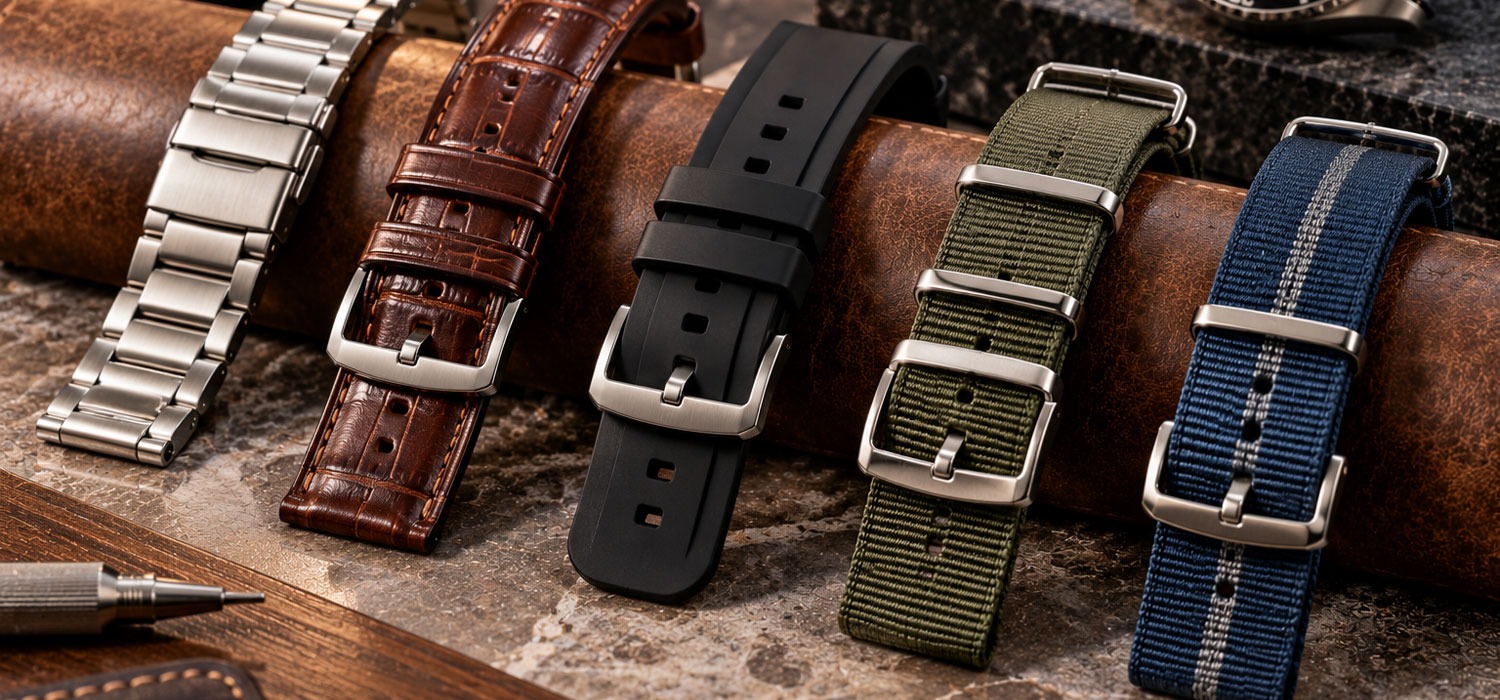
Best for: Office wear, formal occasions, and everyday use in relatively dry conditions.
Avoid it if you swim frequently, sweat heavily, or prefer a strap that requires minimal maintenance.
Leather straps are popular because they conform to the wrist over time. Quality leather gradually becomes more flexible, offering a comfortable fit while maintaining a polished appearance. However, leather is sensitive to prolonged exposure to moisture.
Common Types of Leather Watch Straps
Calfskin Leather
Calfskin is a common watch strap material known for its smooth surface, flexibility, and comfortable feel. It suits both casual and dress watches.
Alligator and Alligator-Grain Leather
A genuine alligator watch strap has a distinctive natural scale pattern. Alligator-grain leather typically uses embossed calfskin to create a similar appearance at a different price point.
Padded Leather
Padded straps have additional thickness near the watch case, giving them a fuller profile and a more structured feel.
Suede and Nubuck
These materials offer a softer, textured finish but require greater care around moisture, dirt, and stains.
Leather works particularly well with men's dress watches and women's dress watches.
For watches with interchangeable bands, Michele interchangeable watch bands offer options to change the watch's appearance without replacing the timepiece.
Remember that leather is a wearable component. Repeated exposure to perspiration and moisture eventually necessitates replacement.
Rubber and Silicone Watch Straps: Built for Active Wear
Best for: Swimming, exercise, humid climates, and everyday activities involving moisture.
Avoid if: You prefer the appearance of traditional leather or need a strap for a particularly formal dress watch.
Rubber and silicone straps offer flexibility, water resistance, and relatively simple cleaning. However, not every rubber watch strap performs the same way.
FKM Rubber Watch Straps
FKM, or fluoroelastomer, is a synthetic rubber valued for chemical-resistance, UV exposure, and environmental wear.
An FKM rubber watch strap generally resists dust and lint better than a silicone strap. It also offers good flexibility and maintains its properties across a wide range of everyday conditions.
FKM is worth considering when you want a durable strap for regular workouts or frequent outdoor use.
Natural and Vulcanized Rubber
Natural rubber offers flexibility and a supple feel. Vulcanization improves the material's strength and elasticity, making it suitable for watch straps exposed to repeated movement.
Vulcanized rubber has long been associated with diving watches because it handles water exposure without absorbing moisture like leather.
Silicone Watch Bands
A silicone watch band is soft, flexible, and commonly found on smartwatches and affordable sports watches.
Silicone handles moisture well but often attracts lint and dust. Depending on its formulation and construction, it may also show surface wear sooner than higher-grade rubber alternatives.
Compared with leather, silicone is generally more practical for sweaty workouts, while leather suits dressier settings.
Browse men's sport watches, women's sport watches, or Tissot watches to compare sporty designs.
After exposure to saltwater or chlorine, rinse suitable straps with fresh water. Follow the manufacturer's instructions for caring for a watch after swimming.
NATO, Nylon, and Fabric Watch Straps: Lightweight and Practical
Best for: Casual use, travel, warm weather, and people who frequently change watch straps.
Avoid if: You need a formal appearance or want a thick watch case to sit as close to your wrist as possible.
Fabric straps offer lightweight comfort, flexibility, and numerous construction options.
What Is a NATO Watch Strap?
A NATO watch strap is traditionally a one-piece nylon strap that goes under the watch case and attaches to it via its spring bars.
The design originated with the British Ministry of Defense in 1973. Its name comes from the NATO Stock Number associated with the strap, rather than from NATO itself.
According to NATO's historical account, the original military design was developed for practical use.
Because a NATO strap passes beneath the case, the watch can remain attached to the wrist if one spring bar fails.
However, the additional fabric layer slightly increases the watch's height.
A two-piece nylon watch strap attaches separately at each end, while a ZULU strap typically uses heavier, rounded metal rings.
Other Fabric Watch Strap Options
Ballistic Nylon: A tightly woven material valued for strength and resistance to everyday abrasion.
Sailcloth: A sailcloth watch strap offers a textured surface and often uses synthetic layers designed to handle moisture.
Canvas: A canvas watch strap provides a lightweight, casual feel but may absorb moisture depending on its construction.
Fabric straps can be practical for casual watches for everyday wear. Certain TAG Heuer watches also use NATO-style straps.
Metal Watch Bracelets: Stainless Steel, Titanium, and Mesh
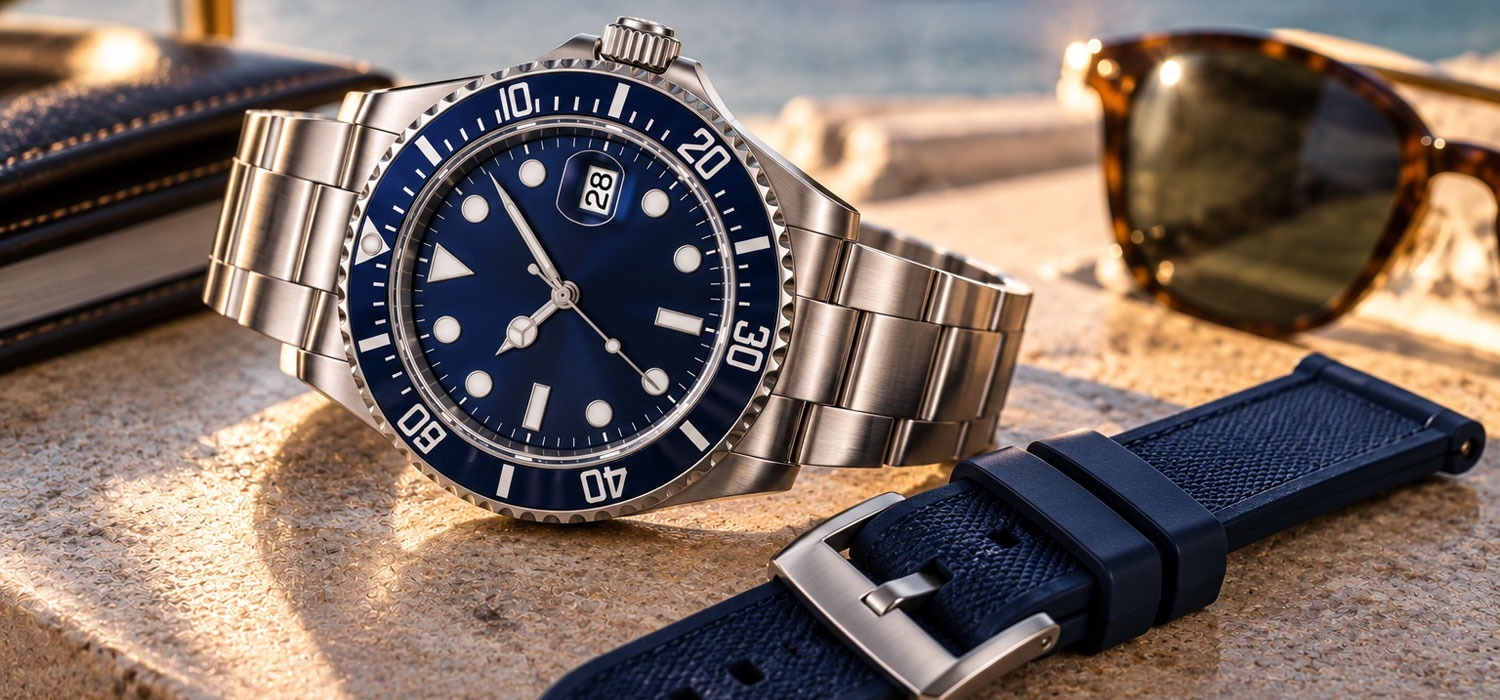
Best for: Everyday durability, regular exposure to changing weather, and people who prefer relatively low-maintenance materials.
Avoid if: You dislike the bracelet's weight, experience discomfort with certain metals, or want frequent strap changes without tools.
Metal bracelets provide a structured fit and withstand everyday wear. Their comfort depends on material, link construction, clasp design, and proper sizing.
Stainless Steel Bracelets
Stainless steel is widely used in watch bracelets because it combines strength, corrosion resistance, and an attractive finish.
Common grades include 316L and 904L stainless steel.
Although stainless steel handles moisture well, it contains nickel. People with nickel sensitivity may prefer another material.
Titanium Watch Bands
A titanium watch band is lighter than a comparable stainless steel bracelet while offering strength and good corrosion resistance.
Titanium is also a common choice for people sensitive to nickel, although individual reactions and component materials can vary.
Its lower weight makes it particularly appealing for larger watches.
Mesh and Milanese Watch Bands
A mesh watch band uses finely interwoven metal links instead of traditional solid bracelet links.
A Milanese watch band typically has a closely woven appearance and often includes an adjustable sliding clasp.
Mesh bracelets can provide a flexible fit and slimmer profile.
Ceramic watch bracelets are another option, offering a hard surface and distinctive finish.
For additional information about coatings and finishes, read our guide explaining how PVD and gold-tone finishes differ.
Best Watch Strap Material by Situation
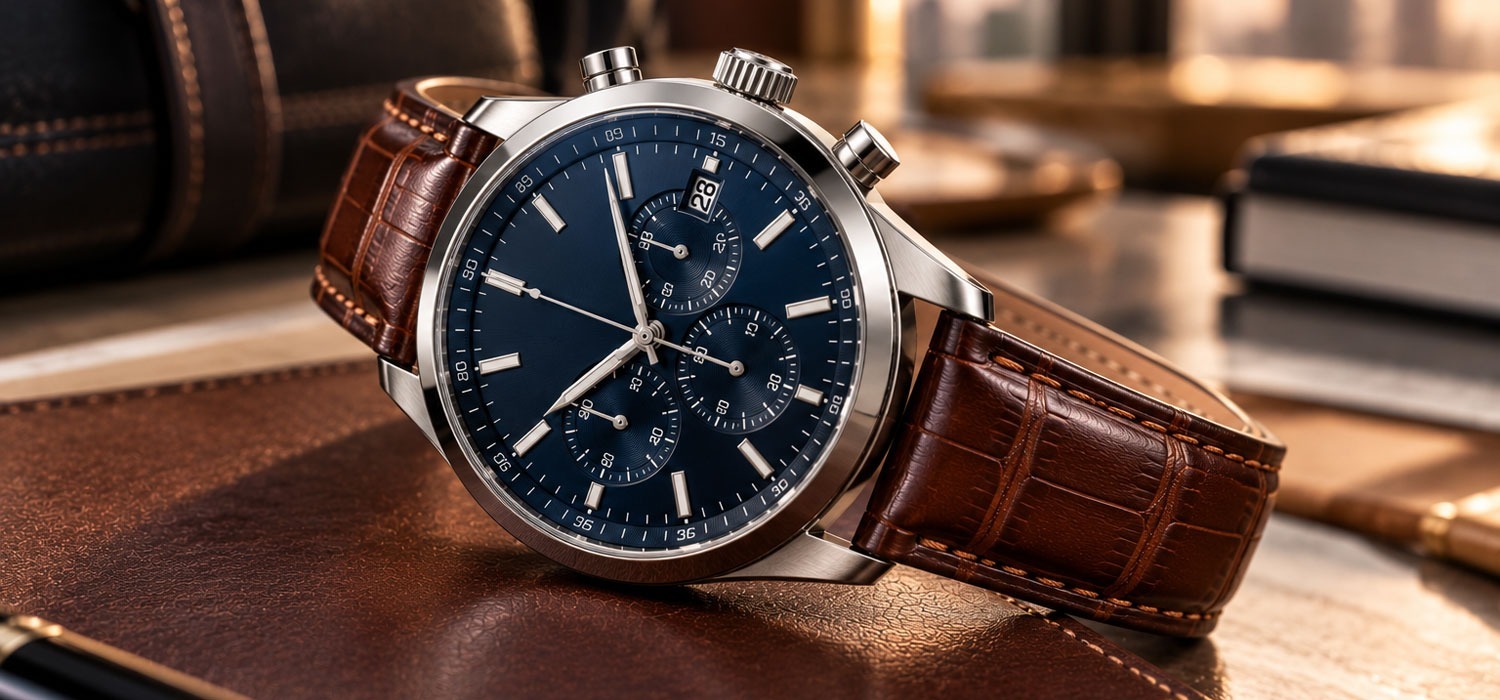
Your daily activities often provide a clearer answer than appearance alone.
Hot Weather and Sweaty Wrists
Choose FKM rubber, quality rubber, nylon, or titanium. These materials tolerate perspiration better than leather. Nylon can absorb some moisture but generally dries more readily.
Swimming and Water Sports
FKM rubber, vulcanized rubber, and corrosion-resistant steel are practical choices. Always confirm the watch itself has a suitable water-resistance rating before swimming.
Office and Formal Wear
Leather, stainless steel, and fine metal mesh work well for watches worn in professional environments.
Travel and Outdoor Activities
NATO and nylon straps offer lightweight comfort. Stainless steel also works when you prefer a bracelet that handles changing conditions.
Sensitive Skin
Titanium, FKM rubber, and suitable fabric straps are common alternatives for people concerned about nickel exposure. Check buckles and other metal components as well.
Frequent Strap Changes
Consider leather or nylon straps with quick-release spring bars. They allow convenient changes when the watch supports them.
Before You Buy: Width, Length, and Fittings
Even the right material will feel uncomfortable if the strap does not fit correctly.
Check the lug width. Measure the distance between your watch's lugs in millimeters. Common widths include 18 mm, 20 mm, and 22 mm.
Measure your wrist. Choose a strap length that allows comfortable fastening without excessive loose material. NATO straps also require sufficient length to pass beneath the case.
Consider the clasp. Traditional tang buckles use holes for adjustment. Folding or deployant clasps secure with a hinged mechanism.
Look for quick-release pins. These make compatible strap replacements possible without a separate spring-bar tool.
Confirm compatibility. Watches with curved ends, fitted connectors, or proprietary attachments may require branded replacement straps.
Aftermarket options can work well with conventional straight-lug designs, provided their measurements and fittings match.
Frequently Asked Questions
What Is the Best Watch Band Material?
There is no universal best watch band material. Rubber or FKM suits swimming and exercise; leather works for dress wear; stainless steel and titanium offer durability; and nylon provides lightweight everyday comfort.
What Is a NATO Strap?
A NATO strap is a one-piece nylon watch strap that passes underneath the case. Developed for the British military in 1973, its construction helps keep the watch attached if one spring bar fails.
Is FKM Better Than Silicone?
FKM generally offers stronger resistance to environmental wear, dust, and lint. Silicone is usually softer and more affordable but tends to attract lint more readily.
Which Watch Strap Is Best for Swimming?
FKM rubber, vulcanized rubber, and suitable stainless steel bracelets are practical swimming options. The watch itself must also have an appropriate water-resistance rating.
Which Watch Strap Material Is Best for Sensitive Skin?
Titanium, FKM rubber, and fabric are common choices for people sensitive to nickel. Always check clasp materials and other components that touch your skin.
How Do I Know What Size Strap My Watch Needs?
Measure your watch's lug width in millimeters and check the manufacturer's specifications. Then select a strap length suited to your wrist circumference and preferred fit.
Find the Right Watch Strap for Your Lifestyle
Choosing the right watch strap material starts with four considerations: water exposure, dress requirements, maintenance, and skin comfort. Once you identify your preferred material, confirm the correct lug width and strap length.
At Inventory Adjusters, you can browse sport watches, dress watches, and casual watches to find a timepiece that suits how you wear it.
Newest Guide & Blog Updates

Who Actually Needs a GMT Watch?
Yes, if you regularly need a second time zone, want a quick 24-hour AM/PM reference, or simply love...

GMT vs. World Timer Watches: What's the Difference?
A GMT watch tracks one additional time zone, while a world timer watch displays all 24 standard tim...
What Is a GMT Watch and How Does It Work?
A GMT watch is a wristwatch that displays a second time zone using an additional hand that complete...
How to Match a Watch Strap to Your Style and Occasion
Your watch looks perfect with jeans, but something feels wrong when you wear it with a suit. Or per...
How to Choose the Right Watch Strap Material
Your watch strap does more than hold your watch in place. It affects how comfortable your wrist fee...
Watch Bracelets vs. Leather Straps: Which Is Right for You?
You've found the watch you want, but there's one decision left. Should you buy it with a metal brac...