
Watch Bracelets vs. Leather Straps: Which Is Right for You?
You've found the watch you want, but there's one decision left. Should you buy it with a metal bracelet or a leather strap? Both versions may look appealing, yet they offer different levels of comfort, durability, and convenience.
When comparing a leather vs. metal watch band, neither option is universally better. Metal bracelets handle moisture, daily wear, and frequent activity well. Leather straps feel lighter, offer a softer fit, and work particularly well with dress watches.
Your decision should depend on your climate, daily activities, personal preferences, and whether you plan to change the band later.
Quick Answer: Which Should You Choose?
- Choose a metal bracelet for durability, water resistance, and relatively low maintenance.
- Choose leather for a lighter feel, comfortable everyday wear, and traditional dress styling.
- Consider replacement costs: Leather wears with repeated use and eventually needs replacing.
- Think about future changes: Buying a watch with its original bracelet is often less expensive than purchasing a matching branded bracelet separately.
What's the Difference Between a Watch Bracelet and a Leather Strap?
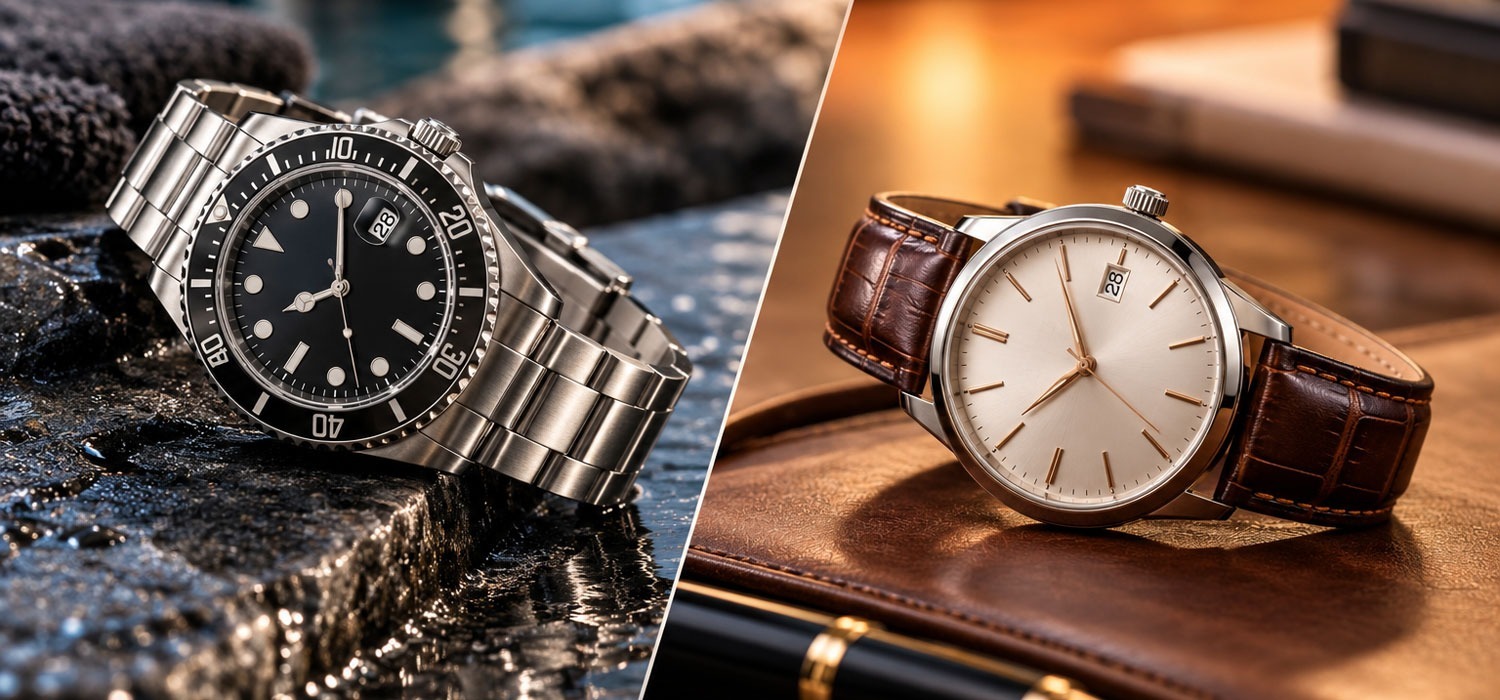
A watch bracelet consists of connected metal links or woven metal mesh that wraps around your wrist. A leather strap uses leather sections attached to the watch case, usually secured with a buckle or folding clasp. The main differences involve weight, moisture tolerance, fit adjustments, appearance, and long-term durability.
What Is a Watch Bracelet Made Of?
Most watch bracelets are made of stainless steel, particularly grades such as 316L or 904L. These materials offer strength and corrosion resistance.
Titanium is another option. It weighs less than steel and is commonly chosen by people who prefer lighter watches.
Gold and gold-tone bracelets come in different finishes, although solid gold is softer than steel and more prone to scratches.
For more information, read our guide to stainless steel, PVD, and gold-tone finishes.
Common Bracelet and Leather Strap Types
Metal bracelets include traditional linked designs, flexible Milanese mesh, and integrated bracelets built to connect directly with specific watch cases.
Leather options include smooth calfskin, textured alligator-grain leather, and padded straps with thicker sections near the case.
Each construction affects comfort, weight, and adjustment.
Watch Bracelet vs. Leather Strap at a Glance
A comparison of a watch bracelet vs. a leather strap shows why neither choice works equally well in every situation. Metal bracelets generally offer greater moisture resistance and longer service life. Leather straps provide lighter weight, convenient adjustments, and a softer feel against the wrist.
|
Feature |
Metal Bracelet |
Leather Strap |
|
Weight |
Usually heavier |
Usually lighter |
|
Comfort in Heat and Cold |
Temperature changes are noticeable |
Feels closer to skin temperature |
|
Water and Sweat |
Handles moisture well |
Absorbs moisture and sweat |
|
Durability and Lifespan |
Long-lasting; links and clasps can wear |
Wears with use and requires replacement |
|
Sizing |
Link removal and clasp adjustments |
Buckle holes allow easy changes |
|
Dress vs. Sport Look |
Suitable for dress and sport watches |
Particularly suited to dress watches |
|
Upkeep |
Periodic cleaning and inspection |
Moisture protection and leather care |
|
Cost to Add or Replace Later |
Branded replacements may cost more |
Replacement straps are often less expensive |
The following sections explain how these differences affect everyday wear and ownership.
Which Is More Comfortable: A Watch Bracelet or Leather Strap?
Leather straps often feel more comfortable initially because they weigh less and sit softly against the wrist. They also become more flexible with regular wear. However, a properly sized metal bracelet can be equally comfortable, especially when its links move freely and the clasp holds the watch securely.
Weight and Balance
A leather strap adds relatively little weight to your watch, making it appealing for smaller wrists and extended wear.
Metal bracelets are heavier because of their links and clasps. On certain watches, the bracelet can even outweigh the watch case.
However, that extra weight may help balance a heavy watch head. A large watch on a very light leather strap can sometimes feel top-heavy.
Temperature and Sweat
Metal responds quickly to surrounding temperatures. It can feel cold when first worn during winter and warmer after exposure to summer heat.
Leather generally stays closer to skin temperature, although it absorbs perspiration.
If you sweat frequently, leather may become uncomfortable and deteriorate faster.
Break-In Period and Adjustments
A new leather strap may initially feel firm. Regular wear gradually softens the material and helps it conform to your wrist.
A metal bracelet doesn't require the same break-in process. Instead, its comfort depends heavily on proper sizing and clasp adjustment.
Durability: Which Lasts Longer?
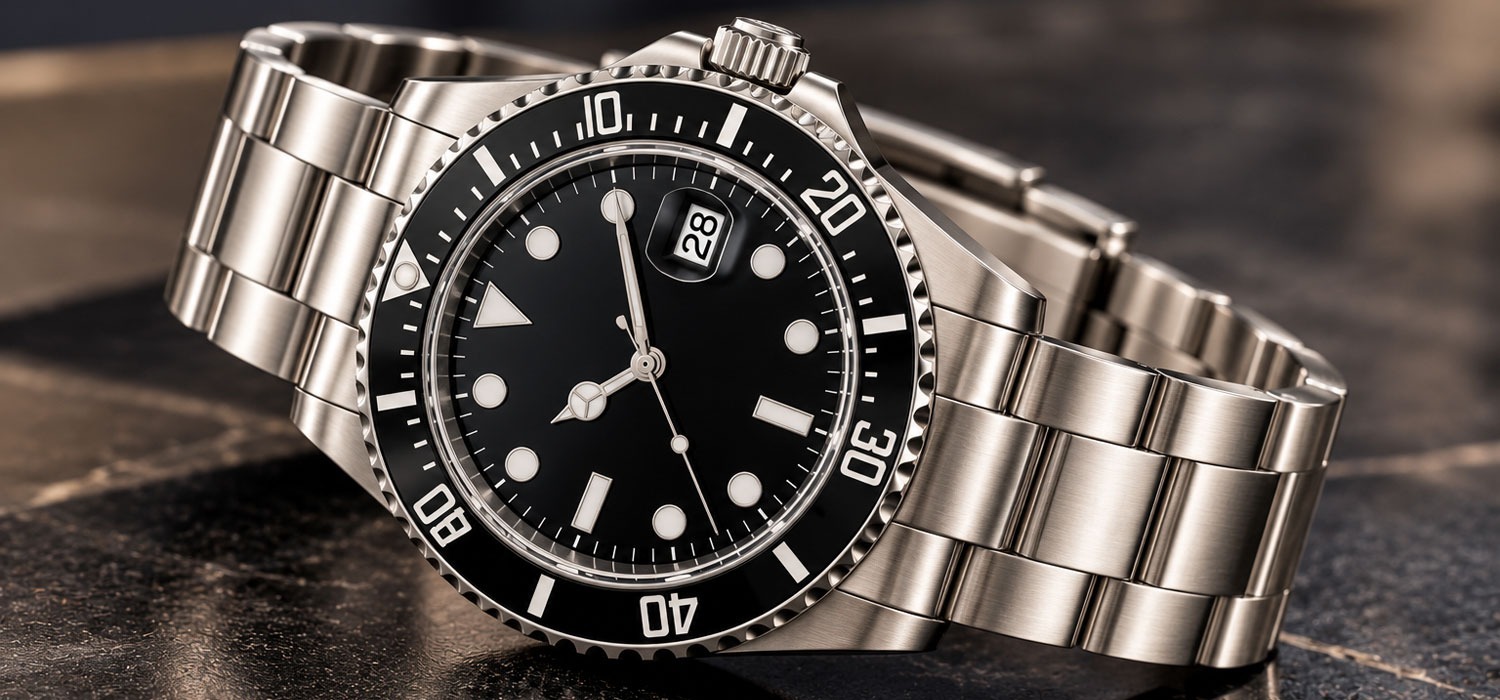
A quality metal bracelet generally lasts longer than a leather strap because stainless steel and titanium resist environmental wear better than leather does. However, metal bracelets are not maintenance-free. Links, pins, and clasps may loosen, while surfaces accumulate scratches. Leather gradually deteriorates through moisture, friction, and repeated bending.
How Metal Bracelets Age
A well-maintained stainless steel bracelet can remain usable for much of the watch's service life.
However, daily movement may cause wear between the links, and clasps can gradually lose their secure fit.
Scratches are also common, particularly on polished surfaces.
When Should You Replace a Leather Strap?
Leather straps are wearable components. Their useful life depends on frequency of use, exposure to water, perspiration, and storage conditions.
Signs that a strap needs replacing include:
- Cracking near the buckle holes
- Stretched or enlarged fastening holes
- Fraying stitches
- Persistent unpleasant odors
- Visible deterioration around attachment points
When browsing pre-owned watches, inspect metal bracelets for excessive looseness and damaged clasps. Check leather straps for cracks, sweat stains, and weakened stitching.
Replacement and servicing expenses also contribute to the ongoing cost of owning a watch.
Water, Sweat, and Everyday Wear
A metal bracelet is generally more practical than a leather one when your watch regularly comes into contact with sweat, rain, or water. Stainless steel handles moisture well, provided it receives appropriate care. Leather absorbs water and perspiration, which can cause discoloration, stiffness, and deterioration over time.
Even if your watch is water-resistant, its leather strap may not tolerate the same exposure.
For swimming, workouts, or particularly humid conditions, consider a suitable metal bracelet or water-resistant rubber strap.
Always check what a water-resistance rating actually covers before wearing your watch in water.
The watch case's rating determines its suitability for swimming, not the bracelet material alone.
Fit and Sizing: Which Is Easier to Adjust?
Leather straps are usually easier to adjust throughout the day because traditional buckles offer several fastening holes. Metal bracelets require a more precise initial fit, often involving link removal or addition. Some bracelets include adjustable clasps that accommodate small changes in wrist size without removing links.
Metal Bracelet Adjustments
A bracelet typically needs links removed to fit a smaller wrist. Many models use a folding or deployant clasp for secure fastening.
Certain clasps include micro-adjustment holes or extension mechanisms that allow minor size adjustments.
These features can be useful because your wrist circumference may change slightly with temperature and activity.
Leather Strap Adjustments
Leather straps typically use a tang buckle, which passes through an existing hole in the strap.
Some leather straps use folding clasps that reduce the need for repeated bending around the buckle.
For additional guidance, see our article about choosing a watch for your wrist size.
Which Suits Your Watch Type?
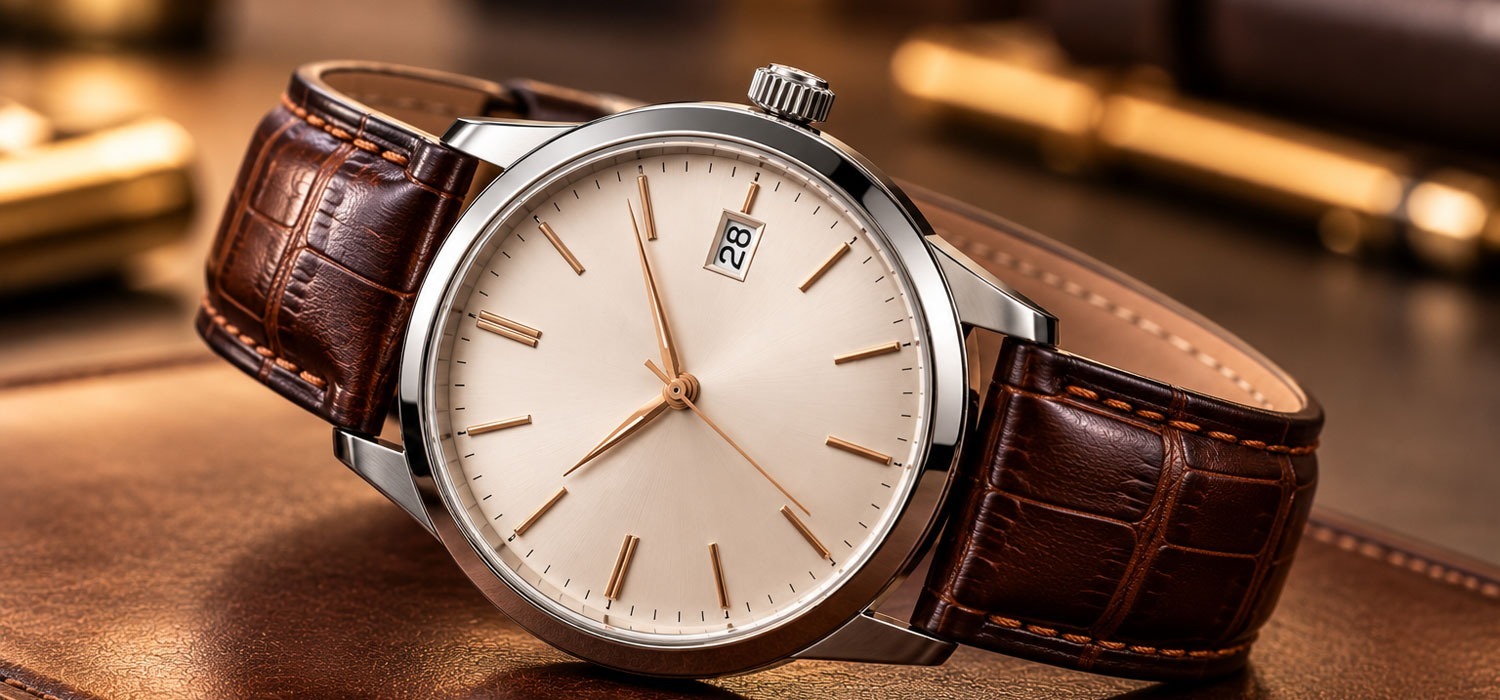
The right band depends partly on whether you own a dress, sport, or everyday watch. Leather is traditionally associated with dress watches, while metal bracelets are particularly practical for active wear. Both options can work for casual watches, and some women's timepieces offer interchangeable designs.
You can also compare dress, sport, and casual watches before making your choice.
Dress Watches
Leather remains a traditional choice for formal watches because it creates a slimmer, understated appearance.
However, polished stainless steel, gold-tone, and two-tone bracelets also work well with dress watches.
Browse men's dress watches and women's dress watches to compare available designs.
Sport and Dive Watches
Metal bracelets are practical for sport watches because they handle water exposure, frequent movement, and everyday activity.
Leather can work for occasional casual use but is less suitable for swimming or frequent workouts.
Shop men's sport watches for designs suited to active lifestyles.
Everyday Watches
Either option can work for daily wear.
Choose leather if you primarily work indoors and prefer a lighter wristwatch.
Select metal if your routine includes outdoor activities, changing weather, or frequent exposure to moisture.
Browse everyday casual watches to compare styles.
Women's Watches
Women's watches often feature slim metal bracelets, decorative bangles, and flexible Milanese mesh designs.
Leather straps provide another option, particularly for smaller dress watches.
Some collections support interchangeable straps. For example, Michele's interchangeable bands allow compatible watches to be worn with different band styles.
Can You Swap a Leather Strap for a Bracelet (or Vice Versa)?
You can often replace a leather watch strap with a metal bracelet if the watch uses compatible attachments. However, matching the width alone does not guarantee a proper fit. Bracelet end links, case shape, and attachment hardware must also match. Watches with integrated or proprietary designs may require specific replacement components.
Before purchasing a replacement, check the following:
- Lug width: Measure the space between the watch's lugs in millimeters. Common widths include 18, 20, and 22 mm.
- End-link compatibility: Fitted metal end links must match the watch case. Straight-end designs can fit more watches but may leave visible gaps.
- Attachment hardware: Confirm whether the watch uses standard spring bars, quick-release pins, or another attachment system.
- Integrated construction: Certain watches have proprietary bracelet connections and cannot accept conventional replacement straps.
Should You Buy the Bracelet Version First?
If you expect to own both options, purchasing the watch with its original metal bracelet is often the more economical choice.
GearJunkie's watch strap buying guidance notes that adding a branded bracelet later can cost more than purchasing the watch with that bracelet initially.
A compatible leather strap can often be purchased separately.
Caring for a Bracelet vs. a Leather Strap
Metal bracelets generally require less maintenance than leather, although both benefit from regular cleaning and careful storage. For metal, the priority is to remove dirt and check the clasp. For leather, the priority is to prevent moisture damage and allow the material to dry naturally between wears.
Metal Bracelet Care
- Wipe away sweat and dirt using a soft cloth.
- Use a brush with soft bristles and mild soapy water only when appropriate for the watch's water-resistance rating.
- Dry the bracelet thoroughly and inspect its clasp and links.
Leather Strap Care
- Keep the material away from prolonged exposure to water.
- Allow the strap to air out after wear.
- Avoid direct sunlight, perfume, and harsh cleaning products.
- Rotate straps when possible to reduce constant wear.
Proper watch storage between wears also helps protect both the watch and its materials.
How to Decide: A Quick Checklist
Choose based on how often you wear your watch, the conditions it encounters, and your preferred level of maintenance.
Choose a metal bracelet if you:
- Exercise frequently or spend time outdoors.
- Want greater resistance to sweat and moisture.
- Prefer a bracelet that needs relatively little upkeep.
- Wear sport or dive watches regularly.
Choose a leather strap if you:
- Prefer lightweight wristwear.
- Usually wear your watch to the office or formal events.
- Want easy buckle adjustments.
- Enjoy occasionally changing your watch's appearance.
Many watch owners keep both options and switch between compatible bands according to their activities.
Frequently Asked Questions
Is a Leather or Metal Watch Band Better?
Neither is better for everyone. Metal bracelets generally offer greater durability, moisture resistance, and easier maintenance. Leather straps provide a lighter, softer feel and a more traditional dress style. Choose according to your daily activities, comfort preferences, and exposure to water.
Do Leather Watch Straps Last Longer Than Metal Bracelets?
Generally, no. Metal bracelets usually withstand repeated use longer than leather straps, although clasps and links can wear. Leather deteriorates with exposure to sweat, moisture, and friction. Its useful life depends on the material, wearing conditions, and maintenance.
Can I Put a Metal Bracelet on a Watch That Came with a Leather One?
Often, yes. Your replacement bracelet must match the watch's lug width, attachment system, and case shape. Fitted end links may require a model-specific bracelet. Watches with integrated or proprietary connections might not accommodate standard metal bracelets.
Can You Wear a Leather Watch Strap in the Shower or Pool?
Avoid wearing leather straps in the shower or swimming pool. Water, soap, and chlorine can damage leather and weaken its structure over time. A water-resistant watch case does not make an attached leather strap equally resistant.
Is It Cheaper to Buy a Watch on a Bracelet or Add One Later?
Buying a watch with its original metal bracelet is often more economical than purchasing a matching branded bracelet afterward. Replacement leather straps are usually easier to source at different price points, provided their fittings are compatible.
Find the Right Watch Band for Your Lifestyle
The leather vs metal watch band decision comes down to durability, comfort, maintenance, and how you use your watch. Choose metal for moisture resistance and longevity or leather for lightweight comfort and dress wear.
Before switching bands, confirm the lug width and compatibility with the attachment.
Browse Inventory Adjusters' dress, sport, and casual watch collections to find a timepiece that suits your daily routine.
Newest Guide & Blog Updates

Who Actually Needs a GMT Watch?
Yes, if you regularly need a second time zone, want a quick 24-hour AM/PM reference, or simply love...

GMT vs. World Timer Watches: What's the Difference?
A GMT watch tracks one additional time zone, while a world timer watch displays all 24 standard tim...

What Is a GMT Watch and How Does It Work?
A GMT watch is a wristwatch that displays a second time zone using an additional hand that complete...

How to Match a Watch Strap to Your Style and Occasion
Your watch looks perfect with jeans, but something feels wrong when you wear it with a suit. Or per...
How to Choose the Right Watch Strap Material
Your watch strap does more than hold your watch in place. It affects how comfortable your wrist fee...
Watch Bracelets vs. Leather Straps: Which Is Right for You?
You've found the watch you want, but there's one decision left. Should you buy it with a metal brac...