
How Do Eco-Drive and Solar Watches Work?
Many watch shoppers see “Eco-Drive” on a Citizen dial and assume it refers to a movement separate from a solar watch. It does not. Eco-Drive is Citizen’s name for its light-powered watch technology. Every Eco-Drive watch is solar-powered, although solar watches from other brands use different names.
So, how do Eco-Drive watches work? A solar cell underneath the dial turns light into electrical energy. That energy is stored in a rechargeable cell, which powers the quartz movement day and night. The result is accurate timekeeping without routine disposable battery changes.
This guide explains how the system works, how to charge it, how long the stored power lasts, and how Citizen Eco-Drive compares with Seiko Solar, Casio Tough Solar, Bering Solar, automatic watches, and standard quartz watches.
Key Takeaways
- Eco-Drive is Citizen’s trademarked name for solar watch technology.
- Sunlight and indoor light can charge the watch, though sunlight charges it faster.
- A full charge commonly powers a modern model for six months or longer in darkness.
- The rechargeable cell can last for decades, but it may eventually need professional service.
Eco-Drive vs. Solar Watch- Is There a Difference?
No. Eco-Drive and solar watches belong to the same movement category.
Citizen uses “Eco-Drive,” Seiko uses “Solar,” Casio uses “Tough Solar,” and Bering uses “Solar.” The brand names differ, but the basic process is similar- light reaches a solar cell, the cell creates electricity, and a rechargeable storage cell keeps the watch running when no light is present.
The simplest explanation is-
Every Citizen Eco-Drive watch is solar-powered, but solar watches from other brands are not called Eco-Drive.
Inventory Adjusters carries more than 40 Citizen Eco-Drive watches, including dress, field, diving, pilot, and chronograph styles. Shoppers who prefer a slim, minimalist design can also compare the Bering Solar collection.
What Is Inside a Solar Watch?
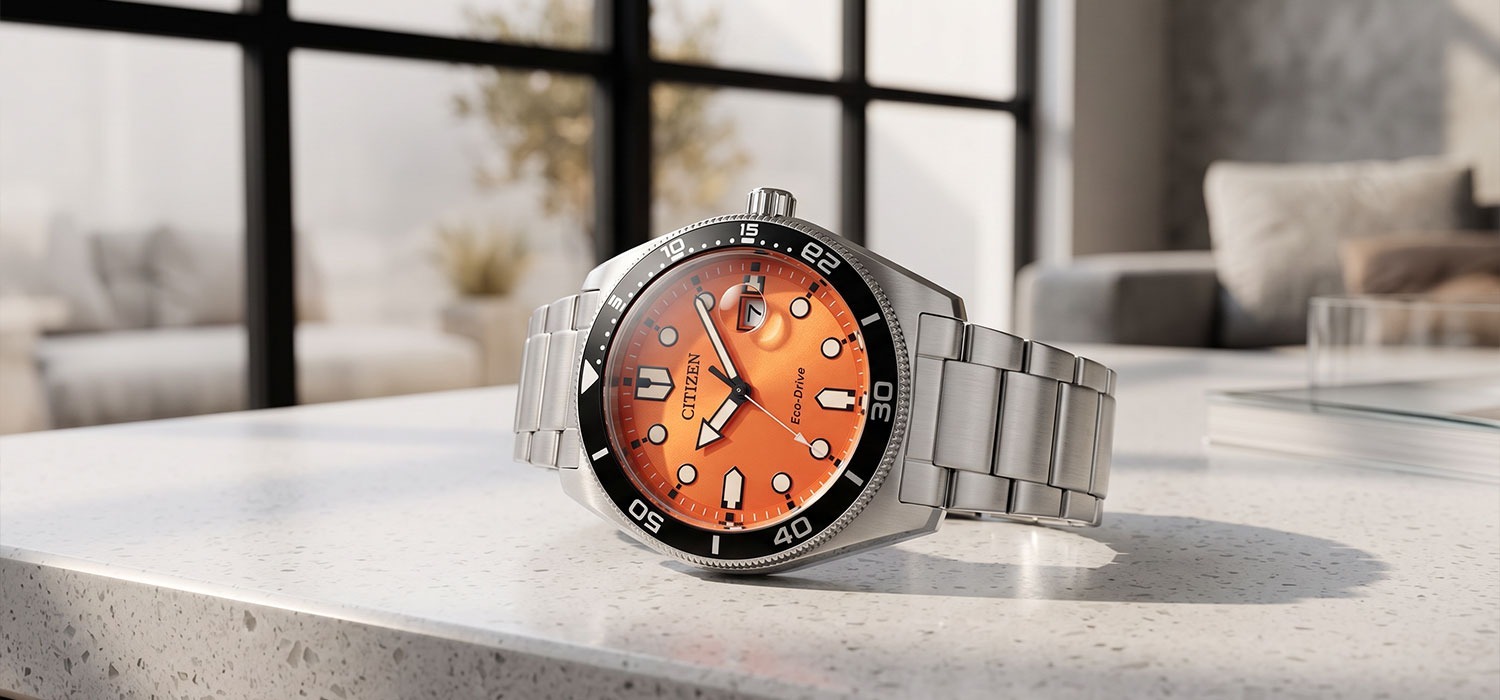
A solar power watch contains three main parts: a light-transmitting dial, a photovoltaic cell, and a rechargeable energy storage cell.
The Solar Cell Beneath the Dial
The cell sits beneath the dial. Light must pass through the dial before reaching it, so the dial is usually translucent rather than fully opaque. It may look solid, but its materials allow enough light to reach the cell below.
Light Becomes Electricity
The solar cell uses the photovoltaic effect. In simple terms, light strikes the cell, generating an electric current. The watch directs that electricity into its rechargeable storage cell.
Direct sunlight, daylight through a window, fluorescent lighting, and LED lighting can all contribute. Stronger light creates energy faster, so outdoor exposure will usually restore charge sooner than a dim office.
The Rechargeable Cell Powers the Watch
People often refer to the storage component as a capacitor, although modern solar watches generally use a specialized rechargeable cell. It stores energy and supplies steady power to the quartz movement.
Once charged, the watch does not need constant light. It continues running at night, in a drawer, or under a sleeve because it draws from the stored reserve. For more help comparing movements and features, review the Inventory Adjusters' watch buying guide.
How to Charge a Solar-Powered Watch
Charging is simple- expose the dial to light.
For routine use, wearing the watch outdoors or near a bright window is often enough to keep it powered. If it has stopped after being stored in darkness, place it in bright indirect sunlight with the dial facing the light. Do not leave it on a hot dashboard or anywhere heat can build up.
Indoor light works more slowly. A watch under a shirt sleeve may receive enough light to maintain some charge, but a deeply discharged watch will recover faster when uncovered.
Charging time varies by model, light source, and remaining power. Check the model manual before using extra functions after a complete discharge.
How Long Do Solar Watches Last on a Full Charge?
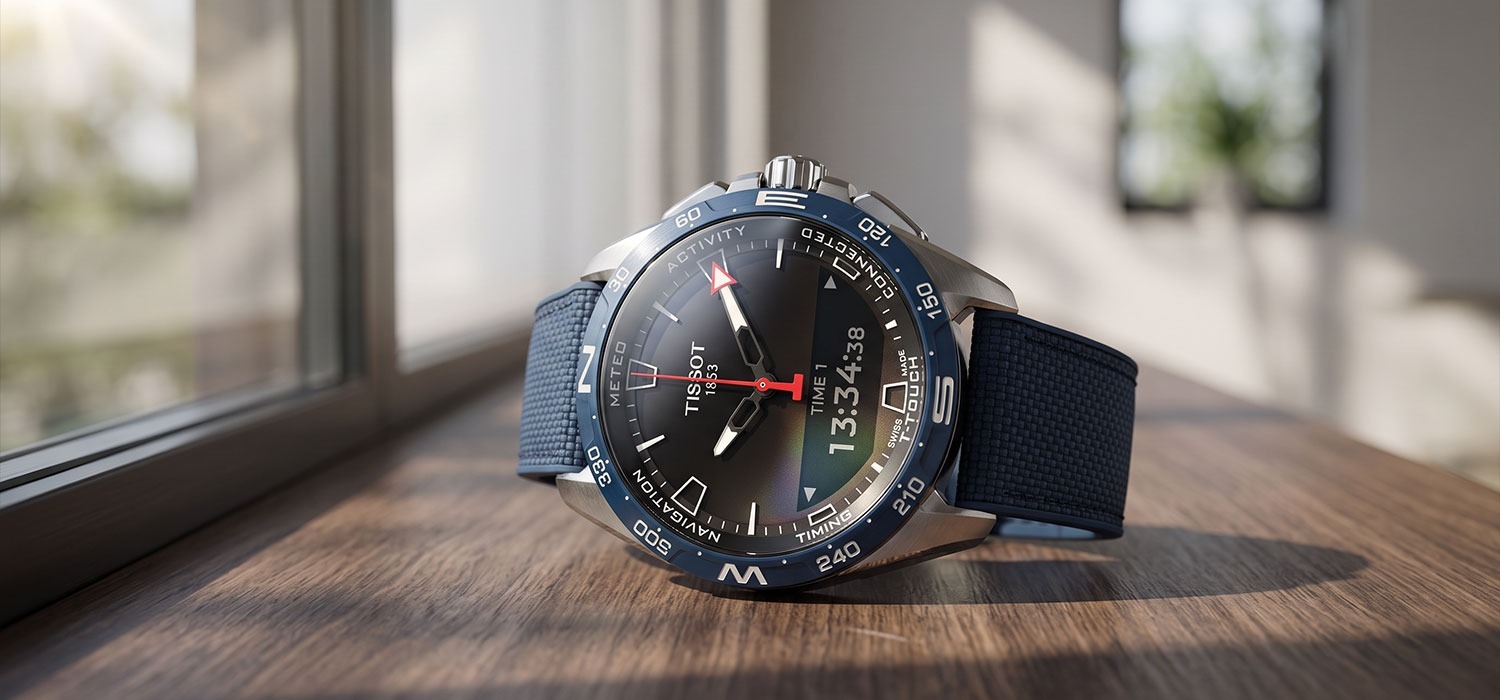
Most modern Eco-Drive and solar watches can run for six months or longer on a full charge without added light. Some models use power-saving functions to extend the reserve in darkness.
The exact duration depends on the movement. A simple three-hand watch uses less power than a model with radio synchronization, alarms, digital displays, or frequent chronograph use.
On many Citizen models, a second hand moving in two-second jumps is the low-charge warning. The watch is still keeping time, but it needs to be charged soon. If it stops completely, charge it before resetting the hands or testing any extra functions.
Do Eco-Drive Watches Ever Need a New Battery?
Eco-Drive watches do not use a disposable battery that needs replacement every few years. That is one of their main ownership benefits.
However, “never needs a battery” does not mean every internal part lasts forever. The rechargeable cell may last 20 years or more, but age, heat, repeated deep discharges, moisture, or movement can damage it and reduce its capacity.
When that happens, the watch needs professional service. The correct replacement is model-specific, and the watch may also need gasket checks, water-resistance testing, cleaning, or movement inspection. For a wider view of ownership expenses, read The Hidden Costs of Owning a Watch.
Citizen Eco-Drive vs. Seiko Solar vs. Casio Tough Solar vs. Bering Solar
All four brands use light to charge an internal energy cell, but their collections serve different buyers.
|
Brand |
Technology |
Common Focus |
Good Fit For |
|
Citizen |
Eco-Drive |
Dress, diving, field, pilot, and chronograph models |
Buyers seeking many styles and function choices |
|
Solar |
Practical dress and sport watches |
Buyers comparing Japanese solar movements |
|
|
Tough Solar |
Digital, outdoor, and radio-controlled watches |
Buyers who want utility functions and rugged cases |
|
|
Bering |
Solar |
Slim cases and Scandinavian styling |
Buyers who prefer minimalist dress watches |
Citizen has the broadest range of light-powered watches in the Inventory Adjusters catalog, with models priced from roughly $175 to $900 or more. Its range includes everyday designs, Promaster diving watches, and aviation models.
Bering Solar offers another price and style direction, with some models listed near $99 despite higher manufacturer-suggested prices. Stock and pricing can change, so check the current category before ordering.
Solar vs. Automatic vs. Standard Quartz
The right movement depends on what matters most to you.
|
Movement |
Power Source |
Upkeep |
Good Fit For |
|
Solar or Eco-Drive |
Light is stored in a rechargeable cell |
Regular light exposure and occasional service |
Accurate, low-maintenance daily wear |
|
Automatic |
Motion winds a mechanical mainspring |
Regular wear, winding, and periodic service |
Buyers who value mechanical craft |
|
Standard quartz |
Disposable battery |
Battery replacement every few years |
Lower entry price and simple ownership |
|
Kinetic |
Wrist motion creates stored electrical power |
Wear and eventual cell service |
Buyers interested in a motion-powered hybrid |
Choose solar or Eco-Drive for quartz accuracy without the need for regular battery changes. It suits an everyday watch that moves between work, travel, exercise, and outdoor use.
Choose an automatic watch if the movement itself is part of the appeal. These watches use gears, springs, and a rotor, but may gain or lose more time and cost more to service.
Choose standard quartz if purchase price matters most. It is accurate and widely available, although battery replacement remains part of ownership.
Compare movement styles across men’s watches and women’s watches. The guide to watch features that actually matter can also help narrow the choice.
Are Citizen Eco-Drive Watches Worth It?
Citizen Eco-Drive watches are a strong choice for buyers who want accurate timekeeping, a variety of style options, and fewer routine service visits.
They suit people who dislike battery changes, do not want to wind an automatic watch, or need a dependable daily piece. The range covers three-hand models, field watches, chronographs, diving watches, and radio-controlled designs.
Still, consider case size, water resistance, dial readability, strap type, and the functions you will actually use. Authenticity and after-sales coverage matter too. Inventory Adjusters offers authenticity assurance, 30-day returns, and published warranty information.
Frequently Asked Questions
1. Is Eco-Drive the same as a solar watch?
Yes. Eco-Drive is Citizen’s trademarked name for solar-powered watch technology.
2. How do Eco-Drive watches work?
A solar cell beneath the dial converts light into electricity, which charges a rechargeable cell that powers the quartz movement.
3. Do Eco-Drive watches need direct sunlight?
No. Sunlight, window light, LED lighting, and fluorescent lighting can charge the watch, though sunlight usually charges it fastest.
4. How long does a full charge last?
Many modern models run for six months or longer on a full charge without added light.
5. Do solar watches need battery replacement?
They do not use routine disposable batteries. The rechargeable cell may eventually need professional service after many years.
6. What does a two-second jump mean?
It is commonly a low-charge warning. Place the watch in a suitable light before it fully stops.
7. Is Citizen Eco-Drive better than Seiko Solar?
Both use the same solar principle. The right choice depends on model, design, price, and required functions.
8. Is Eco-Drive better than an automatic watch?
Eco-Drive is usually more accurate and needs less routine attention. Automatic watches feature mechanical movements and require more maintenance.
9. Are Eco-Drive watches good for daily wear?
Yes. Their accuracy, long reserve, and broad style range make them practical for regular use.
10. Can an Eco-Drive watch charge through a sleeve?
Yes, but charging will be slower because less light reaches the dial.
11. What is inside an Eco-Drive watch?
It contains a light-transmitting dial, a solar cell, a rechargeable energy cell, and a quartz movement.
12. Do solar watches work at night?
Yes. Stored energy powers the watch at night and during periods without light.
13. How much does Eco-Drive cell service cost?
Cost varies by model, condition, and service provider. It is treated as a watch service, not a simple battery swap.
14. Which brands make solar-powered watches?
Citizen, Seiko, Casio, and Bering are among the most familiar makers.
Which Eco-Drive or Solar Watch Is Right for You?
Choose Eco-Drive or another solar watch for accurate daily timekeeping with fewer battery-related service visits. Choose an automatic movement when mechanical construction matters more than low upkeep. Choose standard quartz for a lower entry price and accept periodic battery replacements.
Inventory Adjusters carries Citizen Eco-Drive options for men and women, as well as Bering Solar models in clean, modern styles. Browse the current Citizen men’s collection, Citizen women’s collection, and Bering Solar watches to compare prices, case sizes, features, and availability.
Newest Guide & Blog Updates

How to Tell If a Watch Has Sapphire Crystal
If you are wondering how to tell if a watch has a sapphire crystal, online advice can be confusing....

Is Sapphire Crystal Worth Paying More For?
You are comparing two similar watches. One uses mineral glass, while the other has sapphire crystal...

Watch Crystal Types Explained: Sapphire, Mineral, and Acrylic
A watch crystal does more than protect the dial. It influences how your watch looks, how easily it...

Why Does an Automatic Watch Stop When You Don't Wear It?
An automatic watch stops when the energy stored inside its mainspring runs out. Unlike a battery-po...

How Long Can an Automatic Watch Run Without Being Worn?
Most automatic watches run for approximately 38–42 hours without being worn, or roughly a day and a...
What Is Power Reserve on a Mechanical Watch?
When shopping for a mechanical watch, you may notice specifications such as "38-hour power reserve"...