
How Long Can an Automatic Watch Run Without Being Worn?
Most automatic watches run for approximately 38–42 hours without being worn, or roughly a day and a half to two days, provided they are fully wound. Some newer movements can operate for 70–80 hours, while selected models offer up to 120 hours.
If you remove your watch on Friday evening and find it stopped by Monday morning, that doesn't necessarily mean anything is wrong.
The actual running time depends on the movement, its stored energy, and how fully it was wound before removal. Learning about these factors helps you know what to expect.
How Long Does an Automatic Watch Run Without Being Worn?
An automatic watch generally runs for about 38–42 hours after a full wind, although some modern movements have longer reserves.
The automatic watch power reserve is the amount of time the movement can continue operating without additional winding.
For example, a watch with a 40-hour reserve may continue running throughout the following day after you remove it, while an 80-hour movement may keep running through most of a weekend.
However, these figures assume the mainspring was fully wound when you took the watch off.
If you wore it for only a few hours or spent the day sitting at a desk, the remaining running time could be considerably shorter.
Remember: Running time without being worn is different from a watch's overall lifespan. A properly maintained automatic watch can remain functional for many years.
Why Do Automatic Watches Eventually Stop?
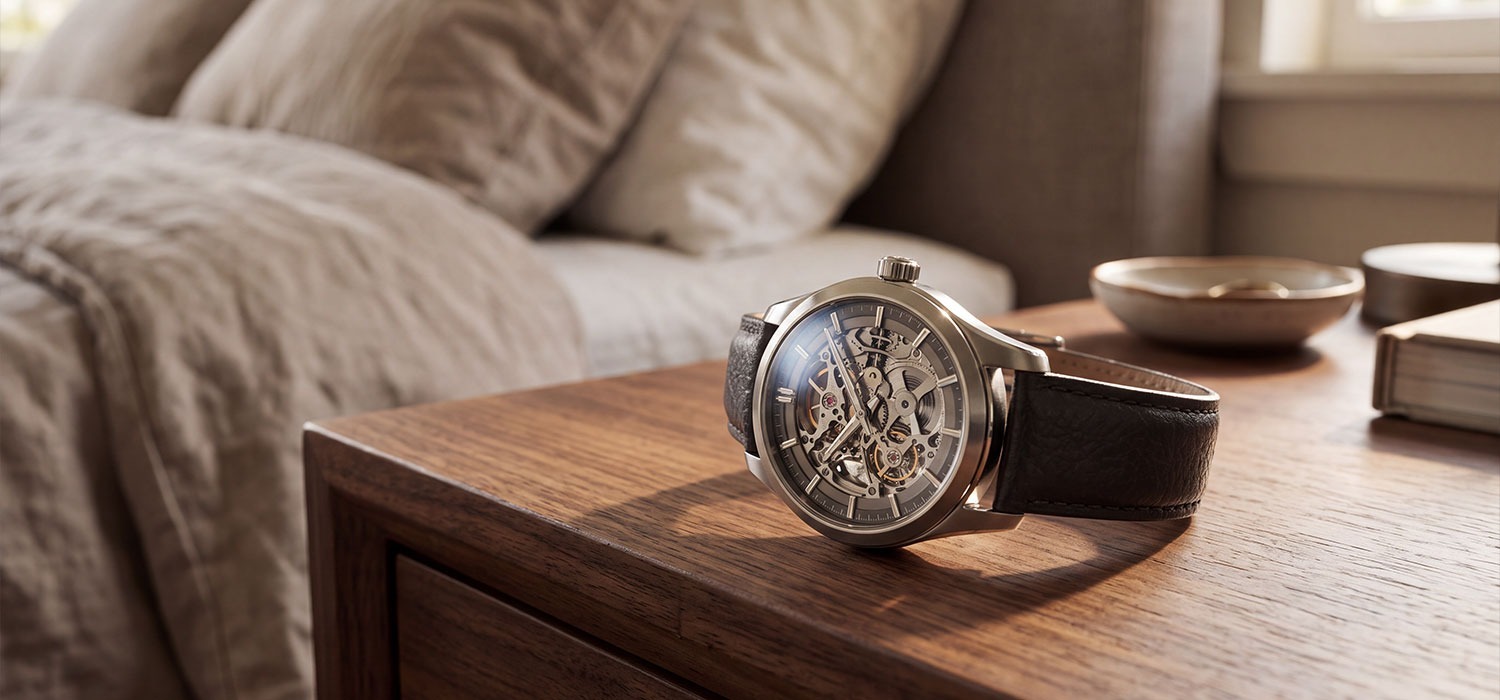
Automatic watches use mechanical energy rather than a conventional battery.
Inside the movement, a weighted rotor responds to wrist motion and transfers energy through gears to the mainspring.
The mainspring stores this energy and releases it gradually to power the watch's timekeeping mechanism.
When you remove the watch, the rotor stops receiving regular movement. The mainspring continues releasing its stored energy until the reserve runs out.
At that point, the movement stops.
Nothing has necessarily broken. The watch simply needs to be wound again to operate.
For a closer explanation of the mechanism, read how the rotor winds the mainspring.
Power Reserve vs. Wear Time: Why Your Watch May Stop Sooner Than Expected
A watch's stated power reserve and its actual running time after removal are not always the same.
Manufacturer specifications describe how long a movement can operate after a full wind. They do not guarantee the same runtime each time you take the watch off.
Example: A Watch With a 41-Hour Power Reserve
Suppose your automatic watch has a stated power reserve of approximately 41 hours.
You wear it for eight hours during a quiet office day, with limited walking or wrist movement.
Because the rotor receives relatively little motion, the mainspring may remain only partially wound.
When you remove the watch that evening, it might have considerably less than 41 hours of energy remaining.
As a result, it could stop the following morning or afternoon.
The actual runtime depends on:
- Activity level: More wrist movement generally provides additional winding.
- Duration of wear: Brief wear may not replenish much stored energy.
- Starting reserve: A watch that was nearly stopped begins with little remaining energy.
- Manual winding: Winding through the crown can increase the reserve before removal.
- Movement condition: Friction, wear, and servicing history can affect performance.
Automatic Watch Power Reserve by Movement
Different manufacturers and movements offer different running times.
|
Watch Movement |
Approximate Power Reserve |
Running Time |
|
Seiko 4R36 / NH36 |
41 hours |
About 1.7 days |
|
Miyota 9015 |
42 hours |
About 1.8 days |
|
Seiko 6R35 |
70 hours |
About 2.9 days |
|
Tissot Powermatic 80 |
80 hours |
About 3.3 days |
|
Oris Calibre 400 |
120 hours |
5 days |
These figures describe the movements' stated or approximate power reserves after a full wind. Individual results may vary.
Do all automatic watches run for the same amount of time?
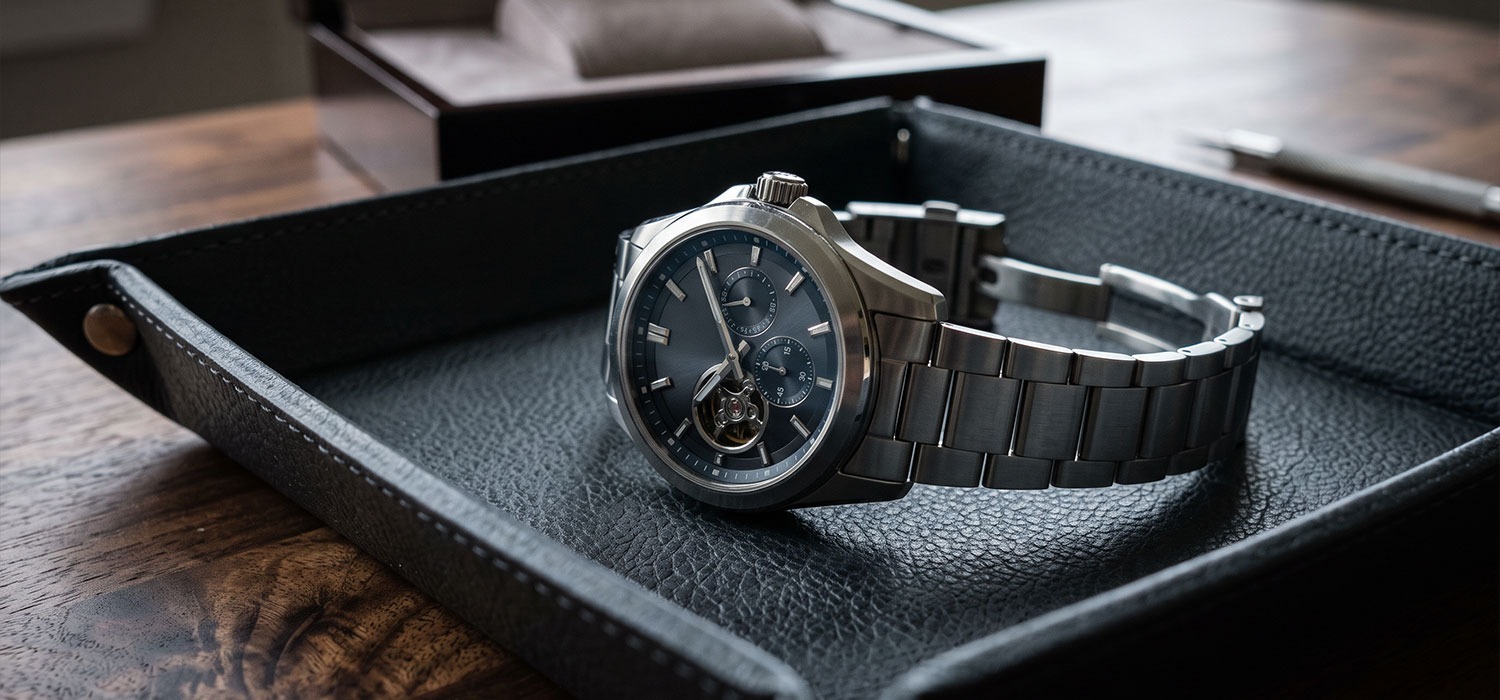
No. Automatic watches can have significantly different power reserves depending on their movements.
One major factor is the mainspring and barrel design. Some movements use larger energy-storage arrangements or multiple barrels to extend running time.
The movement's operating frequency, energy consumption, and winding mechanism also influence performance.
For example, Oris Caliber 400 uses a twin-barrel arrangement to provide a five-day power reserve.
Older movements may offer shorter reserves, particularly when wear or degraded lubrication increases friction.
Two watches with similar appearances can therefore behave differently when left unworn.
If you're comparing movement types before buying, read our guide to quartz, automatic, and mechanical movements.
What Happens When an Automatic Watch Stops, and Is That Normal?
Yes. It is normal for an automatic watch to stop once its stored energy has been exhausted.
When the mainspring can no longer power the movement, the hands stop displaying the passage of time.
The date and day indicators may also need to be adjusted when the watch is restarted.
Leaving an automatic watch stopped for several days or weeks does not, by itself, damage a healthy movement.
What to Expect When Leaving Your Watch Unworn
|
Time Without Wearing |
Expected Outcome |
Recommended Action |
|
Overnight |
Usually continues running |
Wear normally |
|
2–3 days |
Many standard movements stop |
Wind and reset if needed |
|
1–2 weeks |
Most automatic watches stop |
Wind before wearing |
|
Several months |
The watch remains stopped |
Store properly and restart when needed |
A watch that stops after the weekend is not necessarily malfunctioning.
However, if it consistently runs far below its stated reserve after a confirmed full wind, its condition may warrant a professional inspection.
How to Get an Automatic Watch Running Again
Restarting an automatic watch is generally straightforward.
For movements that support manual winding, turn the crown in the manufacturer's specified direction, commonly clockwise, for approximately 20–40 gentle turns.
Next, set the correct time and adjust the calendar if necessary.
When changing the date, follow your movement's instructions. Many movements caution against quick-setting the calendar during certain late-evening and early-morning hours.
Finally, secure the crown and wear the watch normally.
Gentle movement can restart some watches, but shaking only provides limited winding.
The exact procedure depends on the movement, so follow the manufacturer's instructions.
How Long Can an Automatic Watch Sit Unworn? Storage Basics
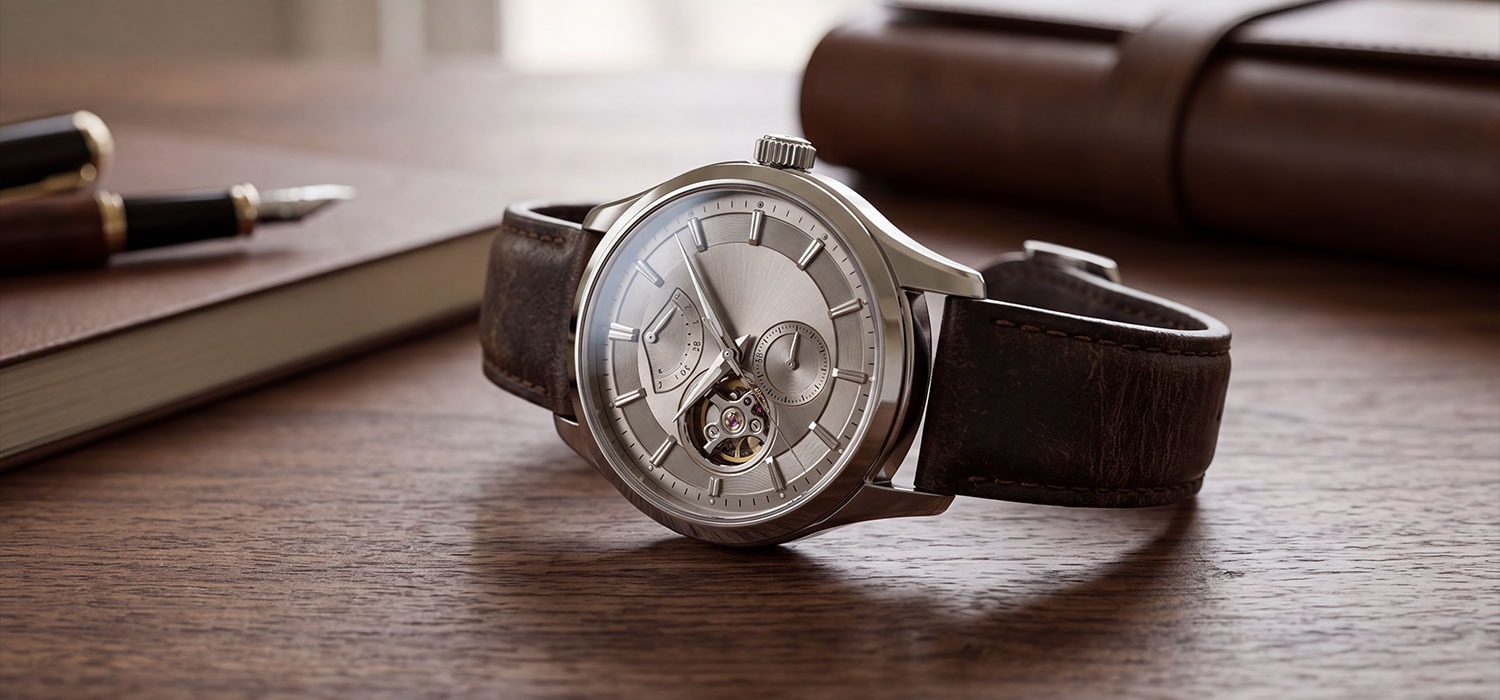
An automatic watch can remain unworn for weeks or months without its stopped condition causing damage.
The movement simply remains inactive until additional energy is supplied.
Proper storage is more important than keeping the watch continuously running.
Choose a clean, dry location away from excessive humidity, strong magnetic fields, and extreme temperatures.
Use a watch box or protective case to prevent scratches and accidental impacts.
Continue following the manufacturer's recommended servicing schedule, even if the watch is worn occasionally.
For more guidance, read how to store your watches properly.
How to Keep an Automatic Watch Running Between Wears
Several habits can help extend your watch's battery life.
Wear it regularly. Frequent wrist movement helps replenish the mainspring's stored energy.
Wind it before removing it. If your movement permits manual winding, adding energy can help it run longer when unworn.
Consider a watch winder. A winder rotates the watch periodically to operate its automatic winding mechanism. It can be convenient for watches with complicated calendar displays, but it is not essential for ordinary automatic watches.
Choose a longer power reserve. If you regularly alternate between watches, a movement offering 70–120 hours may better suit your wearing habits.
When choosing a watch for your lifestyle, consider how often you'll wear it.
For pre-owned watches, pay attention to movement condition and servicing history.
A watch that consistently falls well short of its stated reserve after a full wind may need inspection. Learn about what servicing costs over the life of a watch or visit our watch repair services page.
Frequently Asked Questions
1. Do You Have to Wind an Automatic Watch?
Not always. Automatic watches use wrist movement to wind their mainsprings. However, manual winding is useful when the watch has stopped or has not received enough movement to build sufficient energy.
2. How Often Should You Wind an Automatic Watch?
There is no fixed schedule. Watches worn regularly may require little manual winding, while watches worn occasionally may need winding before use.
3. Can You Overwind an Automatic Watch?
Most modern automatic movements contain a slipping mainspring mechanism that prevents excessive winding under normal conditions. Always follow the manufacturer's winding instructions and avoid forcing the crown.
4. Does a Watch Winder Damage an Automatic Watch?
A properly configured watch winder generally does not damage a healthy automatic movement. However, continuous winding is unnecessary for many simple watches, and manufacturer recommendations should guide its use.
5. Does an Automatic Watch Keep Time While It's Stopped?
No. Once the mainspring's stored energy is exhausted, the watch stops measuring and displaying time. You must reset the time after restarting it.
Wrapping Up
Most automatic watches run for approximately 1.5–2 days without being worn, while longer-reserve movements can operate for three to five days.
Stopping when the power reserve runs out is normal. Regular wear, appropriate winding, and proper storage help keep your watch ready.
Browse the men's watches at Inventory Adjusters to compare automatic models, movements, and features that suit your daily routine.
Newest Guide & Blog Updates

How to Tell If a Watch Has Sapphire Crystal
If you are wondering how to tell if a watch has a sapphire crystal, online advice can be confusing....

Is Sapphire Crystal Worth Paying More For?
You are comparing two similar watches. One uses mineral glass, while the other has sapphire crystal...

Watch Crystal Types Explained: Sapphire, Mineral, and Acrylic
A watch crystal does more than protect the dial. It influences how your watch looks, how easily it...

Why Does an Automatic Watch Stop When You Don't Wear It?
An automatic watch stops when the energy stored inside its mainspring runs out. Unlike a battery-po...

How Long Can an Automatic Watch Run Without Being Worn?
Most automatic watches run for approximately 38–42 hours without being worn, or roughly a day and a...

What Is Power Reserve on a Mechanical Watch?
When shopping for a mechanical watch, you may notice specifications such as "38-hour power reserve"...