
What Is Power Reserve on a Mechanical Watch?
When shopping for a mechanical watch, you may notice specifications such as "38-hour power reserve" or "80-hour power reserve." But what do these numbers actually mean?
Power reserve is the amount of time a mechanical watch continues running after being fully wound, without requiring additional winding.
A watch with a 40-hour power reserve can run for approximately 40 hours after a full wind, even when it isn't being worn.
Understanding mechanical watch power reserve helps you compare different movements and choose a watch that suits your wearing habits. While a longer reserve can be convenient, it doesn't automatically mean the watch is more accurate or better made.
What Does Power Reserve Mean on a Watch?
Power reserve refers to the length of time a fully wound mechanical watch can operate without receiving additional energy. It applies to both traditional hand-wound watches and automatic watches.
Mechanical watches store energy in a coiled mainspring rather than relying on a conventional battery.
When the mainspring is wound, it stores the energy required to operate the movement. As that energy is released, the watch continues measuring time.
For example, a Seiko movement with an approximately 41-hour reserve can run for about 41 hours from a full wind. A Tissot Powermatic 80 movement offers approximately 80 hours of power reserve.
The power reserve specification describes the watch's stored running time, not its overall quality, durability, or accuracy.
It is particularly useful when comparing watches you may not wear every day.
How Power Reserve Works
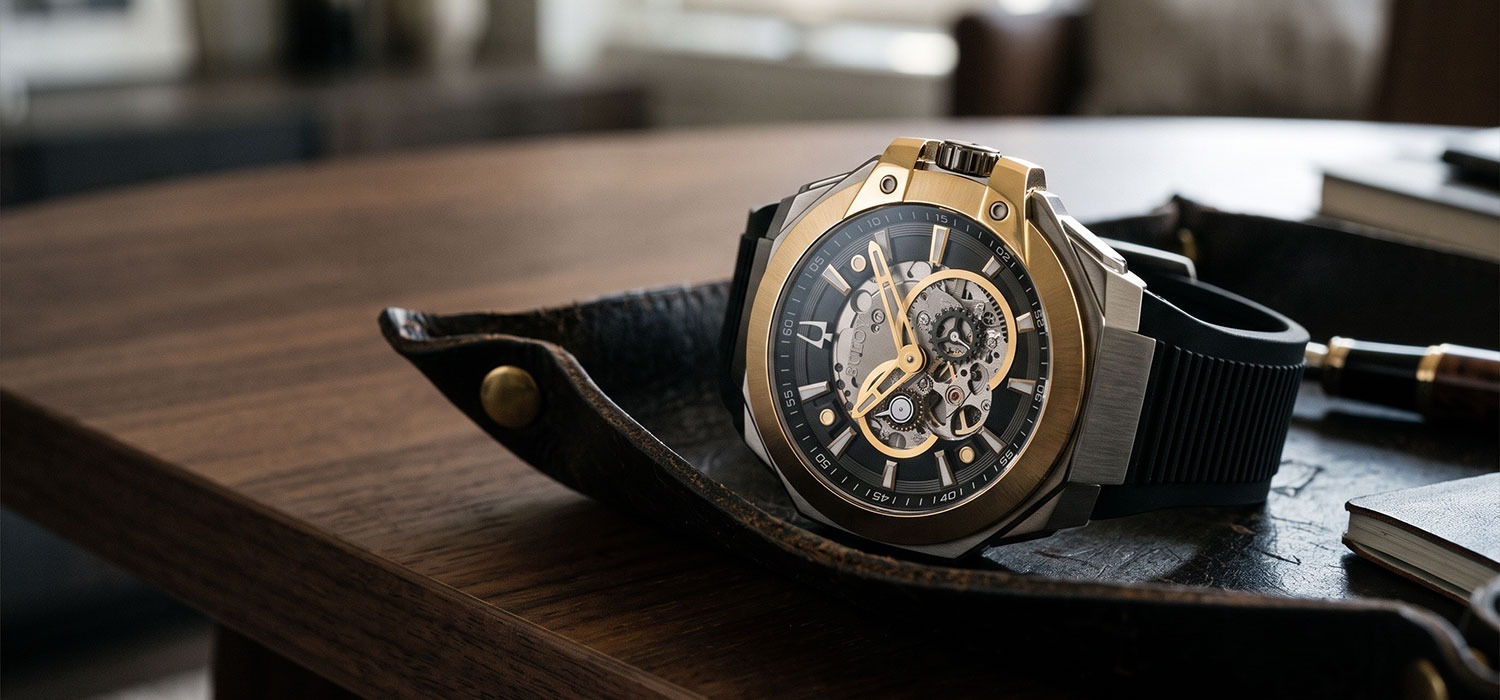
A mechanical watch stores and releases energy through a carefully arranged system of springs, gears, and regulating components.
The mainspring provides the energy, while the movement controls how that energy is released.
The Mainspring and Barrel
The mainspring is defined as a long, thin strip of metal wound into a coil inside a circular component called the barrel.
Winding the watch tightens the mainspring, allowing it to store mechanical energy.
As the spring gradually unwinds, it turns the barrel and supplies energy to the movement.
The amount of stored energy and the rate at which the movement consumes it help determine the watch's running time.
How the Movement Uses Stored Energy
A mechanical movement operates through four connected stages:
- Mainspring: Stores mechanical energy when wound.
- Gear train: Transfers energy from the barrel through a series of wheels.
- Escapement: Releases energy in controlled increments to maintain oscillation.
- Balance wheel: Oscillates with its hairspring to regulate timekeeping.
Together, these components allow the watch to operate continuously until its available energy is exhausted.
For more information, read how a mechanical movement works.
How Automatic Watches Receive Energy
Automatic movements add a rotating weight called a rotor.
As your wrist moves, the rotor turns, helping wind the mainspring through a system of gears.
Learn more about how an automatic watch winds itself.
What Determines a Watch's Power Reserve?
Several mechanical factors determine how long a watch can operate after being fully wound.
1. Mainspring Length and Strength
A longer mainspring can store more usable energy, although its design and operating characteristics also affect performance.
The force delivered by the spring, known as torque, must remain suitable for the movement.
2. Barrel Size and Design
The barrel houses the mainspring.
Its dimensions and construction influence how much energy the movement can store.
Some watches use multiple barrels to increase available running time.
For example, Oris Caliber 400 uses two barrels to achieve a stated five-day reserve.
3. Movement Energy Consumption
Different movements consume energy at different rates.
The gear train, escapement design, operating frequency, and friction between moving components influence energy requirements.
A movement with a more demanding design may consume its stored energy faster than another movement with similar mainspring capacity.
4. Mechanical Condition
Lubrication, component wear, and movement condition can affect actual performance.
An older watch that has not received appropriate maintenance may run for less time than its specifications suggest.
For ownership considerations, see our guide to servicing and maintenance costs.
Typical Power Reserve Ranges for Mechanical Watches

Most mechanical watches offer approximately 36–72 hours of power reserve, although some modern movements can operate substantially longer.
A reserve of around 38–42 hours is common among traditional entry-level and mid-range movements.
Newer designs may provide 70–80 hours, while selected calibers offer five days or more.
Mechanical Watch Power Reserve Comparison
|
Watch Movement |
Approximate Power Reserve |
Equivalent Running Time |
|
Seiko 4R36 / NH36 |
41 hours |
1.7 days |
|
Miyota 9015 |
42 hours |
1.8 days |
|
ETA 2824-2 |
38 hours |
1.6 days |
|
Seiko 6R35 |
70 hours |
2.9 days |
|
Tissot Powermatic 80 |
80 hours |
3.3 days |
|
Oris Calibre 400 |
120 hours |
5 days |
Figures represent stated or approximate power reserves after a full wind. Actual running time may vary.
What Is a Good Power Reserve for a Mechanical Watch?
For most people who wear a watch daily, a reserve of approximately 40 hours is sufficient.
A 70–80-hour reserve offers more flexibility when removing the watch overnight or over a weekend.
Watches with a 120-hour or more reserve may appeal to collectors who regularly rotate among multiple timepieces.
However, longer running time is a convenience rather than a universal measure of watch quality.
The amount of reserve you need depends primarily on how often you wear the watch.
Power Reserve vs. Accuracy: Are They Related?
A longer power reserve does not automatically make a mechanical watch more accurate.
Accuracy depends on the movement's design, regulation, component condition, and other mechanical factors.
A well-regulated watch with a 40-hour reserve may keep better time than a poorly regulated watch with an 80-hour reserve.
However, the amount of energy remaining in a movement can influence its timekeeping performance.
As the mainspring approaches the end of its reserve, the torque it delivers may decrease.
This can reduce the balance wheel's amplitude, potentially letting the watch to gain or lose time at a different rate.
Some manufacturers design movements to maintain more consistent energy delivery throughout the running period.
Therefore, two points are important:
- A longer stated reserve does not guarantee better accuracy.
- A movement's accuracy may change as its stored energy approaches depletion.
These distinctions are useful when comparing specifications.
Manual and Automatic Winding: How Each Builds Power Reserve
Both manually wound and automatic watches store energy in mainsprings. The primary difference is how that energy is supplied.
Hand-Wound Mechanical Watches
A traditional hand-wound watch receives energy when its owner turns the crown.
Once wound, the movement uses its stored reserve until additional winding is required.
Owners generally follow a regular winding routine based on their movement's specifications.
Automatic Mechanical Watches
An automatic watch's power reserve builds through wrist movement, with the rotor winding the mainspring.
Most modern automatic movements also support manual winding through the crown.
However, wearing a watch does not guarantee that its mainspring becomes fully wound.
For example, eight hours of limited movement during an office workday may provide less winding than an active day.
Most modern automatic movements use a slipping mainspring mechanism that helps prevent excessive winding.
When the reserve runs out, the movement stops. This is normal, and the watch can generally resume operating after winding.
Learn more about quartz, automatic, and mechanical movements compared.
What Is a Power Reserve Indicator?
A power reserve indicator displays approximately how much stored energy remains in the mainspring.
It functions similarly to a fuel gauge.
The indicator may appear as a small hand, an arc-shaped scale, or another display on the dial. Some watches position it on the case back.
Known in watchmaking as réserve de marche, the indicator is mechanically connected to the winding system.
Early developments included a Breguet prototype in 1933, with Jaeger-LeCoultre subsequently bringing the concept into wristwatch production.
Power reserve indicators are especially useful for manually wound watches because owners can see when additional winding is needed.
They also appeal to collectors who alternate between watches.
How Much Power Reserve Do You Actually Need?

The ideal power reserve depends on your daily routine and how frequently you change watches.
|
Wearing Habit |
Suggested Power Reserve |
Main Benefit |
|
Daily wearer |
38–42 hours |
Suitable for routine use |
|
Occasional wearer |
60–80 hours |
More time between wears |
|
Weekend wearer |
70–80 hours or more |
Greater flexibility over several days |
|
Watch collector |
80–120+ hours |
Longer running time during rotation |
If You Wear One Watch Daily
A standard power reserve is usually sufficient because regular winding or wrist movement helps replenish the stored energy.
If You Alternate Between Watches
A longer reserve can reduce the frequency of time resets.
Some collectors also use watch winders for automatic watches with complicated calendar displays.
If You're Buying Your First Mechanical Watch
Consider power reserve alongside movement reliability, accuracy, case materials, water resistance, and maintenance requirements.
Our guide to which watch specs actually matter can help you prioritize these features.
A longer reserve may be convenient, but it should not be the only reason to choose one watch over another.
Frequently Asked Questions
1. What Is a Good Power Reserve for a Mechanical Watch?
A reserve of approximately 38–42 hours is suitable for most daily wearers. Watches offering 70–80 hours of power reserve provide additional flexibility, particularly when they are not worn every day.
2. Does a Longer Power Reserve Mean a Better Watch?
No. A longer reserve allows a watch to operate for more time without winding, but it does not automatically indicate greater accuracy, durability, or manufacturing quality. Other movement specifications also matter.
3. Can You Overwind an Automatic Watch?
Most modern automatic watches contain a slipping mainspring mechanism that prevents excessive winding under normal conditions. However, you should always follow the manufacturer's instructions and avoid forcing the crown.
4. Does an Automatic Watch Have a Power Reserve?
Yes. Automatic watches are mechanical watches that store energy in a mainspring. Wrist movement replenishes the energy, while the power reserve determines how long the movement can operate without additional winding.
5. Do Quartz Watches Have a Power Reserve?
Most conventional quartz watches use batteries rather than wound mainsprings, so mechanical power reserve specifications do not apply. Some solar-powered quartz watches have their own energy-storage ratings.
Wrapping Up
Power reserve indicates how long a fully wound mechanical watch can run before requiring additional energy.
For daily use, approximately 40 hours is often sufficient. Longer reserves provide greater convenience for occasional wearers and collectors.
When comparing watches, consider running time alongside movement quality, accuracy, and maintenance requirements.
Browse Inventory Adjusters' men's automatic and mechanical watches and women's watches to find a timepiece that suits your preferences and wearing habits.
Newest Guide & Blog Updates

How to Tell If a Watch Has Sapphire Crystal
If you are wondering how to tell if a watch has a sapphire crystal, online advice can be confusing....

Is Sapphire Crystal Worth Paying More For?
You are comparing two similar watches. One uses mineral glass, while the other has sapphire crystal...

Watch Crystal Types Explained: Sapphire, Mineral, and Acrylic
A watch crystal does more than protect the dial. It influences how your watch looks, how easily it...

Why Does an Automatic Watch Stop When You Don't Wear It?
An automatic watch stops when the energy stored inside its mainspring runs out. Unlike a battery-po...

How Long Can an Automatic Watch Run Without Being Worn?
Most automatic watches run for approximately 38–42 hours without being worn, or roughly a day and a...

What Is Power Reserve on a Mechanical Watch?
When shopping for a mechanical watch, you may notice specifications such as "38-hour power reserve"...