
Unworn, “New Old Stock,” and “Display Model” Explained
You are comparing three similar watches online, but each listing uses a different condition label. One says “unworn,” another says “new old stock,” and another says “display model.” The prices are different, but the labels do not immediately explain what has actually happened to each watch.
These terms describe a watch’s history, not automatically its quality. A watch labeled differently can still be in similar condition, while two watches with the same label can have very different histories.
The challenge is that sellers do not always use these terms consistently. Understanding what each label means helps you compare watches based on facts rather than assumptions.
An owner has never worn an unworn watch; a new old stock watch is older inventory that was never sold, and a display model watch was shown in a retail setting but not owned. Each condition requires checking age, storage, packaging, and service history.
What Does “Unworn” Mean on a Watch?
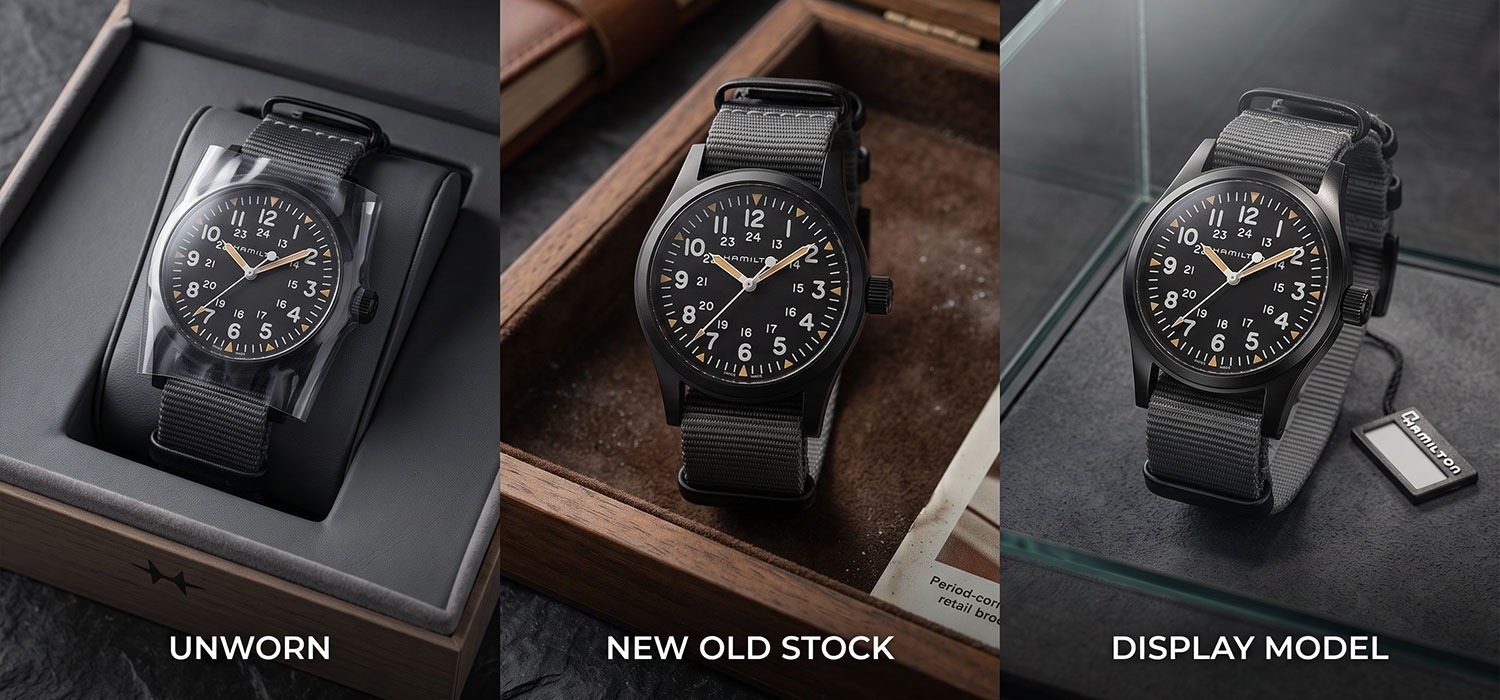
An unworn watch is a watch that has never been worn on someone’s wrist. The term describes wear history only.
It does not automatically tell you when the watch was manufactured, how long it has been stored, or whether the original warranty is still active.
When evaluating an unworn watch, consider:
- Storage history: An unworn watch may have spent months or years stored in a warehouse, retailer, or private collection.
- Production date: A watch can be unworn and still be several years old.
- Packaging: Many unworn watches retain protective stickers, hang tags, and original packaging.
- Warranty status: Manufacturer coverage depends on the brand’s warranty terms and when the warranty period began.
This creates an important distinction: "unworn" does not always mean "recently manufactured".
A watch can be untouched by a customer yet still show signs of aging due to time. The watch has not been worn on the wrist, but storage conditions still matter.
What Is New Old Stock (NOS)?
New old stock watches are watches that were produced in the past, entered the supply chain, and were never sold to a consumer.
The word “old” is important. NOS watches are often discontinued references or previous production models that remained unsold.
Unlike a simple condition grade, new old stock describes the watch’s history.
A genuine NOS watch usually means:
- A retail customer never owned it.
- It may be from an older production period.
- It may represent a discontinued or replaced reference.
- It may have spent years in storage.
However, NOS does not guarantee perfection.
A new old stock watch can still have:
- Storage marks
- Aged lume or paint
- Packaging that is not fully period-correct
- Components that may need attention due to age
The term is also used inconsistently across the watch market. Some sellers use NOS strictly to describe unsold inventory, while others use it more loosely to describe watches in excellent condition.
Because of this, buyers should ask specific questions rather than relying only on the label.
What Is a Display Model Watch?
A display model watch spent time in a retail case or showroom environment. It was available for customers to view and handle, but was not previously owned as a daily-wear watch.
Display exposure is different from wrist wear.
Any marks usually come from:
- Customer handling
- Staff demonstrations
- Placement in display cases
- Removing and replacing the watch during presentations
Common signs of display handling may include light marks on:
- Bracelet surfaces
- Clasp areas
- Caseback
- Packaging
The dial and crystal are generally expected to remain clean, although every watch should be inspected individually.
Other considerations include:
- The original packaging may have been opened, separated, or replaced.
- Quartz display watches may have depleted batteries from sitting powered on.
- Automatic watches may have remained unwound for long periods.
A display model watch is not automatically damaged. The condition depends on how it was handled and inspected before sale.
Unworn vs New Old Stock vs Display Model
|
Criterion |
Unworn |
New Old Stock |
Display Model |
|
Previously worn |
No |
No |
No, but handled in retail |
|
Handling |
Minimal storage handling |
Storage handling only |
Customer and staff handling |
|
Production age |
Any age |
Usually older production |
Often, the current or recent generation |
|
Display exposure |
None |
None |
Yes |
|
Expected condition |
Excellent |
Excellent to good; storage marks possible |
Very good; light marks possible |
|
Packaging |
Usually complete |
Variable |
May be opened, worn, or replaced |
|
Main buyer consideration |
Confirm age and warranty |
Confirm service needs |
Confirm cosmetic condition |
The best choice depends on what matters most to you. A collector may value NOS for its originality, while a buyer seeking maximum value may prefer a display model at a larger discount.
Does “Unworn” Always Mean “Brand New”?
No. Unworn describes wear history, not whether the watch is recently manufactured.
A brand new watch usually indicates recent production, a current warranty, and factory-fresh condition. An unworn watch may not have all those characteristics.
Important differences include:
Manufacturing Date vs Purchase Date
A watch may sit unsold for years before reaching a buyer. The production date and purchase date can be very different.
Warranty Period
Manufacturer warranties are often limited by time. An older, unworn watch may have reduced or expired factory coverage.
A seller's warranty can become an important factor when buying older inventory.
Battery and Components
Quartz watches stored for long periods may require battery replacement. Mechanical watches may need inspection because lubricants can change over time.
Seals and Gaskets
Time affects components even when a watch has never been worn. Water resistance checks or servicing may be recommended depending on age and model.
Unworn is a positive condition indicator, but it should always be evaluated alongside age and documentation.
Why Are NOS Watches Attractive to Collectors?
New old stock watches attract collectors because they can offer something difficult to find: an older reference in its original factory state.
Potential benefits include:
- Original factory finish
- Unpolished case surfaces
- Period-correct dial, hands, and bracelet
- Access to discontinued models is no longer available through normal retail channels
However, NOS watches also come with considerations:
- Servicing may be needed.
- The factory warranty may have expired.
- Storage conditions affect the actual condition.
- The NOS label should be verified.
A NOS watch is not automatically more valuable than every newer watch. Its value depends on the brand, reference, rarity, demand, documentation, and condition.
For collectible discontinued references, NOS status can matter significantly. For ordinary discontinued inventory, NOS refers to stock sold through liquidation channels.
What Should You Check on a Display Model?
Before buying a display model watch, ask for details about the actual piece.
|
Check |
What to Look For |
|
Clasp and bracelet underside |
Areas where handling marks usually appear |
|
Caseback |
Light scratches from display stands or counters |
|
Crystal and dial |
Clean surfaces with no unusual marks |
|
Lug edges |
Signs that the case has not been polished |
|
Battery or power reserve |
Whether a quartz battery has been replaced |
|
Protective stickers |
Whether original coverings remain |
|
Packaging |
What box and accessories are included |
|
Inspection status |
What was checked before listing |
A display label explains where the watch came from. It does not replace an actual condition inspection.
How Condition Terminology Affects Watch Price
Condition labels influence price because they affect buyer expectations and confidence.
|
Variable |
How It Affects Price |
|
Condition |
The biggest factor for most buyers |
|
Age |
Affects warranty, service needs, and parts availability |
|
Rarity |
Discontinued collector models may command different pricing |
|
Documentation |
Complete records can support future resale |
|
Warranty |
Seller coverage may matter when the factory warranty is unavailable |
|
Demand |
Popular references attract more buyers |
|
Reference |
The exact model determines comparable prices |
The label is only the starting point. The actual watch details determine whether the price makes sense.
How Inventory Sources Create Different Watch Conditions
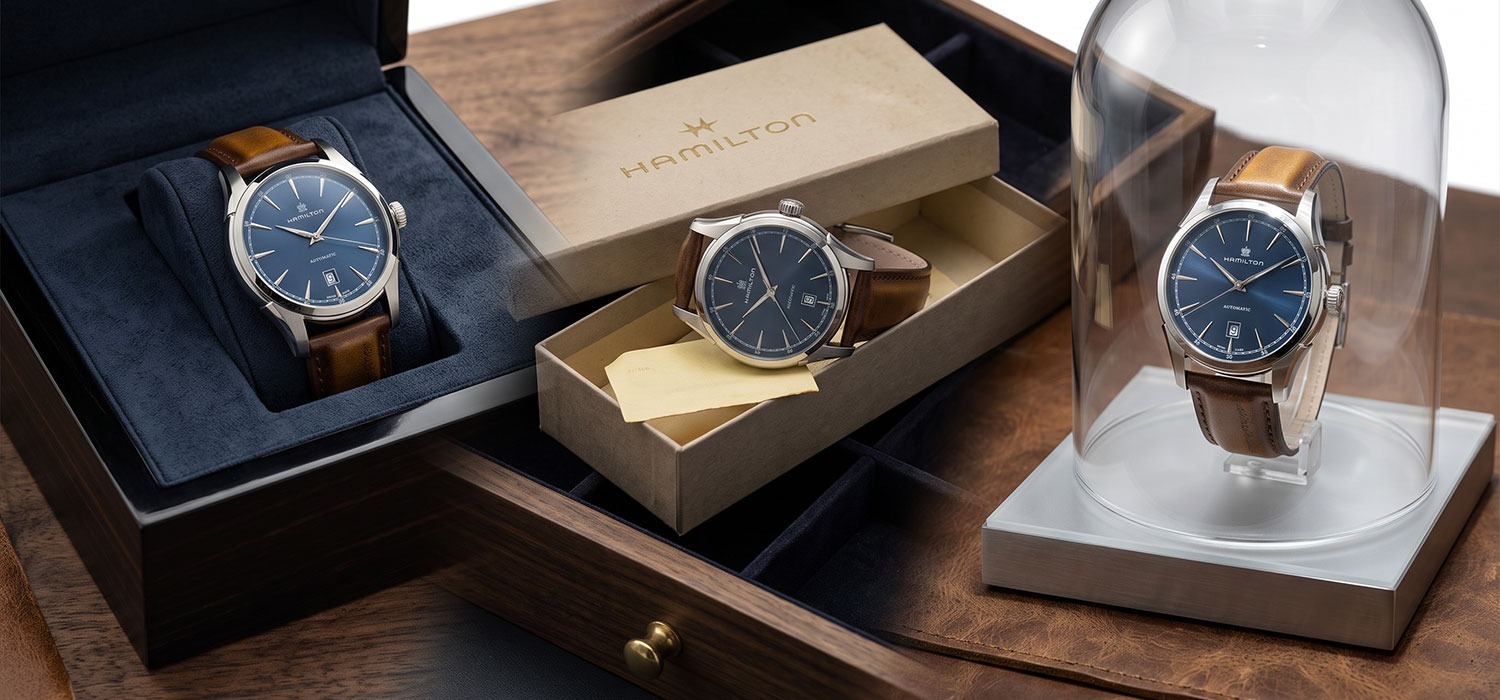
Different watch conditions exist because watches enter the market through different routes.
Common sources include:
- Overstock: Unsold inventory from retailers or authorized dealers.
- Closeouts and liquidations: Older inventory is moved when a retailer or brand clears stock.
- Store displays: Watches shown to customers but never owned.
- Older inventory: Watches that remained unsold beyond their production cycle.
- Pre-owned acquisitions: Watches previously owned and worn.
Inventory Adjusters purchase watches through closeouts, bankruptcies, and overstocks in large quantities. The company also obtains name-brand timepieces through authorized liquidations.
Each listing describes the watch condition individually. Inventory includes overstock, display pieces, and pre owned watches ranging from gently worn to near-new condition. Every item is inspected for authenticity and operation before shipping.
Watches ship with the original box when available. When an original box is not available, a quality unmarked box suitable for gift presentation is provided.
Which Watch Condition Is Best for You?
|
If You Want... |
Consider... |
Why |
|
Lowest price on a current watch |
Display model |
Discounts may exceed the cosmetic difference |
|
A discontinued reference in original form |
New Old Stock |
Offers original configuration and factory details |
|
Factory-fresh presentation |
Recent unworn watch |
Provides the closest experience to new retail |
|
A gift-ready watch |
Unworn with confirmed packaging |
Presentation matters |
|
Maximum value per dollar |
Display model or pre-owned |
Trades minor cosmetic differences for savings |
There is no single best condition category. The right choice depends on whether you prioritize price, originality, presentation, or collectability.
Questions to Ask Before Buying
Before purchasing any watch with a condition label, ask:
- What exactly does this condition label mean?
- What year was the watch manufactured?
- Has it ever been displayed?
- Are there any cosmetic marks on the actual watch?
- Has it been serviced?
- Does it need a battery replacement?
- What packaging is included?
- Are original documents available?
- What warranty applies?
- What is the return policy?
The condition label is only a summary. These answers provide the real details behind the watch.
Frequently Asked Questions
1. What does new old stock mean on a watch?
New old stock means a watch was produced previously, remained unsold, and never reached a retail customer. It often refers to discontinued or older inventory.
2. Is an unworn watch the same as brand new?
No. An unworn watch has never been worn, but it may be older and may not have the same warranty status as a recently produced watch.
3. Are display model watches considered used?
Display watches are not typically considered used in the ownership sense, but they may have handling marks from retail exposure.
4. Do new old stock watches need servicing?
They may. Time affects lubricants, batteries, and components even when a watch has never been worn.
5. Is NOS better than buying new?
Not always. NOS can offer discontinued references and original details, but buyers should consider age, servicing, and warranty status.
6. How much cheaper should a display model be?
There is no fixed discount. The right price depends on the watch, condition, packaging, warranty, and current market value.
The label is only the starting point. The listing provides the real answer. Inventory Adjusters describes each watch condition individually, inspects every piece before shipping, and backs most watches with a two-year warranty and a 30-day return window. Compare available watches and find the condition that fits your needs.
Newest Guide & Blog Updates

How to Tell If a Watch Has Sapphire Crystal
If you are wondering how to tell if a watch has a sapphire crystal, online advice can be confusing....

Is Sapphire Crystal Worth Paying More For?
You are comparing two similar watches. One uses mineral glass, while the other has sapphire crystal...
Watch Crystal Types Explained: Sapphire, Mineral, and Acrylic
A watch crystal does more than protect the dial. It influences how your watch looks, how easily it...
Why Does an Automatic Watch Stop When You Don't Wear It?
An automatic watch stops when the energy stored inside its mainspring runs out. Unlike a battery-po...
How Long Can an Automatic Watch Run Without Being Worn?
Most automatic watches run for approximately 38–42 hours without being worn, or roughly a day and a...
What Is Power Reserve on a Mechanical Watch?
When shopping for a mechanical watch, you may notice specifications such as "38-hour power reserve"...